
A stack of red folders, several blue Trend pens and a pad of lined Post-it notes were precariously perched on my night table stand as I ventured into reading my first set of final report cards for the 19/20 school year. To be absolutely honest I had no idea what to expect. Within days of them being due to administration, the guidelines for what was to be assessed and commented on changed from including everything from September to March 13 to only including learning activities from Jan 31 to March 13. Keeping in mind that as a result of job action, term one reports were not sent home and educators had submitted a class list with letter grades/marks to administrators. My bucket of class lists still sits safely on the corner of my office credenza.
In order to help alleviate any stress during a time of multiple stressors, our message to staff was one of “breathe” and do the best that you can. We shared that we would be reading each set with a lens of grace and flexibility. I was prepared for any number of scenarios and poised to take my own advice and “breathe”.
Historically, reading report cards included significant time identifying corrections (those little typos that are hard to catch when you’re reading your own work), ensuring that the correct boxes are clicked (IEP, ESL, NA/I/ Core) making sure that if we’re calling the student Suzie on page one, that she is reflected as Suzie on page two and not Susan or Sue, ensuring that the mark and the comment jive and of utmost importance that the reports reflect a positive tone for each and every learner. We want families to know that we love their child, that we know their strengths, that we know our “stuff” as educators and we know what to do in order to support the next steps on their child’s journey toward success. Pages were, at times, filled with coloured notes and the lined post-it notes were filled with additional things to “wonder about” when meeting with the educator.
But this time was different! My coloured Trend pen rarely graced the pages of the report cards. Our crew was incredibly precise with how they crafted these reports. Minimal errors J .They found a way to effectively provide families with a positive, thorough learning profile of their children and provide a sense of reassurance for the upcoming school year.
 And as for my lined Post-it Notes, the following words were penned: Memories, Recognize, Celebrate, Resilient, Dodgeball, Lions Club Dictionaries, Pride, Navigate, Flexible and Perseverance. Staff effectively acknowledged how proud they were of their students’ ability to transition from face to face to online learning within days. They praised students for overcoming other distractors and being committed to showing up each day to Google Meets and completing assignments. They praised students for learning how to problem solve technology issues and to collaborate with each other, even though they weren’t together. They celebrated their time together, both in person and online. They shared that they are looking forward to the fall and can’t wait to see their students again.
I love when my staff ask students to reflect on their learning for the year and include that in their reports. This year, even though students weren’t in school, many of our staff still found a way to embed those all import messages. I learned that for one student their favourite memory was getting a dictionary from our friends at the Lions Club (note to self, send them a message tonight and let them know). I also learned that one grade three student loves Phys. Ed with Mrs. Mills because they never play Dodgeball ~ he is fearful of the game (note to self, let the grade 4 teachers know that). And the list goes on and on.
This is just one more idea to add to my ever growing list of “Positives in the Midst of a Pandemic”. I have no doubt that families will be reading this set of reports and rejoicing in the fact that their children not only survived, but actually thrived during the past few months ~ and they did so as a result of a team of educators who worked tirelessly to support them.
Here’s to using those lined post-it notes for capturing memorable moments not mistakes!
How was your report card writing/reading experience this spring?
Come write with me…
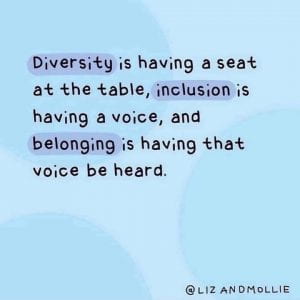 Throughout my career, I’ve been so fortunate to be asked to support a number of colleagues as they transition from classroom educator to vice principal or from vice principal to principal. I love the opportunity to highlight their leadership skills and provide specific examples of how they have positively impacted their school cultures. The conversation easily flows from one question to the next with great details and examples until we get to the “diversity/inclusion” question. Each time it is asked (and I always know when it’s coming) I pause as I find myself having to dig a bit deeper to provide concrete examples ~ mostly because the candidates that I’m supporting create diverse/inclusive cultures as a matter of their everyday interactions with their staff, students and broader school community. For me, it is more of a mindset than an actionable objective.
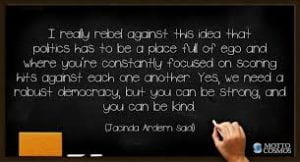 This morning, during my daily social media scroll I came across an article discussing the Prime Minister of New Zealand, Jacinda Ardern’s possible solution to economic recovery from COVID-19. Ardern first came to my attention with her swift ban on semi-automatic guns in the wake of the Christchurch massacre. I was immediately impressed and continued to watch her leadership moves.
 Do you ever wonder what triggers memories? I have no doubt that somewhere in the land of Google, one would find endless links to such research.
 I’m intentionally crafting and publishing today’s post early this morning as I’m anticipating that once 1:00 pm rolls around and the Minister of Education makes his announcement about the remainder of the school year, regardless of the message, my mind will begin to shift in a number of directions. If the message is that we’re maintaining Learn at Home for the next 6 weeks, how do we continue to engage families and maintain positivity among our staff? What will it look like as we distribute the personal belongings for over 750 students? But most importantly closure ~ not the physical closure of the school, but the emotional closure that happens at the end of a school year. For us, our tradition has been that at 3:29 p.m., on the P.A. system, we play “
 As I was scrolling through a number of online articles, today, I came across this one
 Like so many of you, I watched former
  Reflected on my pre-pandemic calendar for tonight was our annual OPC Spring Dinner. Historically, an evening to come together with colleagues, one last time before the end of the school year, to share funny anecdotes and upcoming summer plans. It is also our opportunity to celebrate and recognize colleagues who have decided to take the next step in their journey and venture into retirement. For the past few years, the evening has been a bittersweet one, as many of those who are retiring are my contemporaries. We started teaching or we entered into the wild world of administration at the same time. I start to envision the fall when we come together for our first meeting of the new school year and know that there will be fewer and fewer familiar faces. It’s a magical time in one’s career when you know all of the retirees and some of them you’ve had the pleasure of working closely with.
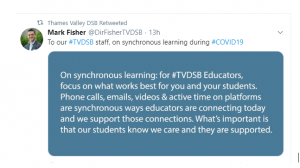 As I sat with my pen poised, ready to take notes during our weekly check in with our Director and Senior Team, my mind was racing as to what our school board’s next steps were going to be in reaction to the Minister of Education’s announcement, late last Friday afternoon. Stephen Lecce took to the airwaves and shared that it was always the Ministry’s expectation that teachers were providing synchronous (in real time) learning opportunities. I found myself going back to mid-March, when the Ministry modeled the first Learn at Home learning experiences. At no time did the Ministry offer synchronous opportunities. As I recall their offering was a list of websites. I couldn’t help but wonder, if it was “always” an expectation that such synchronous learning was an expectation, then why didn’t the Ministry model how they wanted that to look when we first started down this path.