
Keep Your Eye on the Ball

download “Keep your eye on the ball and a firm grip on your club”  resonates on the fairway on the days that I play golf with  my mom.  She is a very talented golfer and my game is  inconsistent on the best of days. I know that she means  well, but I’ll admit that I cringe as I digest her feedback.    Fast forward to the local driving range where a friend  has agreed to come and watch me break in a new club. Low and behold, he provides the same feedback (almost verbatim)  and all of a sudden my reaction is one of gratitude. I immediately put it into practice and voila, that little white ball beautifully sails towards the horizon. Exact same feedback, but my reaction and subsequent implementation varied greatly!

It was on one of those “gotta love this darn game” fairways that I recently had a discussion with a colleague about effective feedback.  It wasn’t the usual conversation about how we give feedback, but rather how we accept it.   She had attended the Global Leadership Summit sponsored by Willowcreek in August and one of the presenters discussed receiving feedback as his topic.

I started to reflect on this premise on a couple of levels.  First my own reaction when receiving feedback. Besides my well-intentioned mom, I receive and actually seek feedback from my supervisors and team members on a regular basis.  What factors contribute to my successful implementation of that feedback?  Knowledgeable other, respect for the person providing the feedback, shared experience, the way in which the feedback is delivered, the expectation for the implementation, accountability???images (3)

When we think about our students and feedback, our most recent practice has been to provide our educators with the tools and strategies to deliver meaningful, timely descriptive feedback.  As a profession we are evolving past the “Good Job” and “Gold star” stickers which is creating the conditions for educators to articulate exactly what students need to accomplish in order to move along the learning continuum. The rich dialogue that educators are having both with their students and with each other is having a significant impact on student achievement.  Many of our colleagues are also diving head first into the world of pedagogical documentation and using various platforms to document the learning for the purpose of sharing it with colleagues, students and parents as a focal point for discussions about improvement.

So, in the midst of this fantastic feedback frenzy, I can’t help but wonder if we have spent enough (or any) time preparing students on how best to receive feedback.  What will it take to ensure that they don’t tune us out?

The other layer of this inquiry is how do we continue to have rich learning dialogues with colleagues knowing the importance of not only providing feedback but receiving it.  We are passionate about our practice and take it personally when others comment on what we are doing and how we are doing it.   How can we open our ears and hear what others are sharing without becoming defensive?
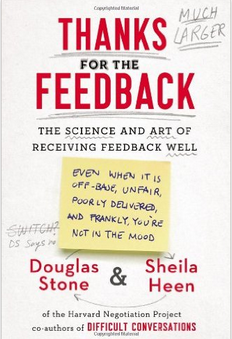
2015-09-19_0014 Just today, I had a conversation with a colleague in  passing and I started to share my new thinking on the  topic of feedback. Within minutes, she highly  recommended “Thanks for the Feedback” written by  Douglas Stone and Sheila Heen.  Looks like I’ve just  acquired one more book to add to my list of “must  reads”!


What factors affect how you receive feedback?  How can we better prepare both ourselves and our students to effectively receive feedback?


Come write with me…..

#MyNewYearCommitments

I love a challenge! But when that challenge includes encouraging more educators to share their thoughts and ideas via their blogs, I get doubly excited! A week ago, @MrSurti threw down the gauntlet by posting his three New Year Commitments and then tagging a number of us and encouraging us to follow suit. I have been so impressed with the creativity and thought-provoking posts of my colleagues as they have been sharing their selection of commitments. So, before the newness of this school year becomes stale, I best share my top three.

images

  •  Put Feet to my Tweets ~ My day usually begins with  reading a number of Tweets and then commenting on  them as I share them with my followers. On average, I  share about 5 per day. Over the past couple of years, that  has added up to over 4000 tweets. Although each idea  represented within the articles is meaningful and  relevant, I frequently find myself lamenting the fact that implementing these ideas is much more complicated than just retweeting them. One great idea that I recently tweeted involved adopting the concept “walking” meetings. There are too many days where we find ourselves confined to meeting rooms and the most steps we take are the three flights of stairs that we mount each morning. So, here’s a heads up to my team members and an invitation to store a pair of comfy shoes at their desks.


  • Encourage the Teams to Dream ~ Inspire, support, challenge, motivate, provoke, persuade and the list of adjectives could go on and on. As I’ve shared before, I am truly blessed with the teams that I get to work with. They challenge me to be a stronger leader, a more dedicated learner and one who continues to test the boundaries of the status quo. As we enter our third year together, I commit to being more purposeful and intentional in ensuring that we are always working towards our dreams of how best to support educator professional learning. images (1)


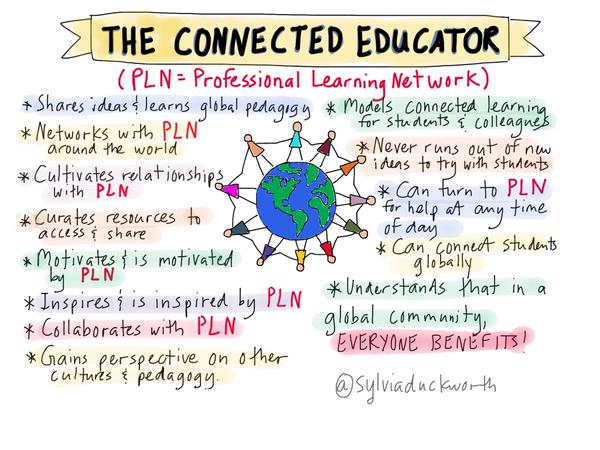
  • Connect the Unconnected ~ If you are reading this post, then you have accessed it via Facebook or Twitter and therefore you are already a connected educator. Preaching to the connected “converted” may make us feel good, but we are not truly building capacity in the ranks of our connected educators. As the 2015-2016 school year unfolds, I commit to exploring and implementing new and creative ways to encourage more educators to see the benefits of using platforms such as Twitter or blogging to extend their own professional learning network.

images (2)

Thank you to @MrSurti for the nudge. Step one was  stating the commitments, step two (the most important  step) is to put them into place.  I’m wondering if those of  us who have publically published our commitments would be willing to provide a monthly update on how those commitments are taking shape and what impact they are having.


What are you committed to doing differently this year?

Come write with me…

Here’s to this year’s Harvest!!

DSC03520 There it is, the first leaf to give into the annual  reduction  of chlorophyll and thus the spotting of the bright red  and orange colours are no longer inhibited by the strong  green colour of the foliage. Each year we know that is  about to happen and yet we still marvel at the  magnificent site as each day our surroundings of lush  green morph into shades of an autumn hue.

For those of us in education, the changing of the leaves also signals a return to a world of teaching, learning and leading ~ a world that I love!

Here is my random thought for today, as I am filled with excitement for the new school year which is just hours away…..

I find it interesting that, although our school year calendar is based on an ancient agricultural cycle whereby children were “freed” from their studies in the summer months in order to contribute to the farm duties, we start the school year in the fall.

DSC03510  Autumn is a time of harvest ~ a time to reap the benefits  of what we planted in the spring.  Tomatoes hang  precariously from their vines (in more abundance than  we can consume), apples turn from their premature sour  green to a shiny red, pumpkins overtake their fenced in  garden boundaries and decorate the ground in an orange  splendor and those once tiny sprouts of green leaves grow into towering yellow sunflowers (tipping over because of the extreme weight of their ready to be picked seeds).DSC03497

Shouldn’t we be reaping the harvest of our students’ learning in the fall, instead of beginning to plant those seeds which will need constant love, care and commitment to see them flourish throughout the next 10 months?   Preparing the conditions whereby students will be able to show their magnificent colours.  Ah…the reds, golds, yellows and oranges ~ each meaningful in its own way and none more important than the other.

The anticipation of what this year’s crop of students will be able to produce by next spring is so exciting. It is like the initial planting of the seeds.  They are placed into the ground in one form and with the right conditions they emerge, grow and flourish into something that is more beautiful and more bountiful than we could have ever imagined.

Here’s to my colleagues who tomorrow will be meeting their new “crop” of babies.  They will create the fertile conditions in the form of warm welcomes, smiles, student generated learning initiatives, Makerspaces, community welcoming atmospheres, collaborative opportunities and a host of other tools which will emerge as the year goes on!  Educators will hone the tools that they have and learn new ones in order to ensure that their crop weathers the storms, the extreme heat and every other challenge that our children overcome throughout the year.

I can’t wait to see our Spring Harvest!  It will be the best ever!

What are your hopes for your harvest this year?

Come write with me…..
A Revolution

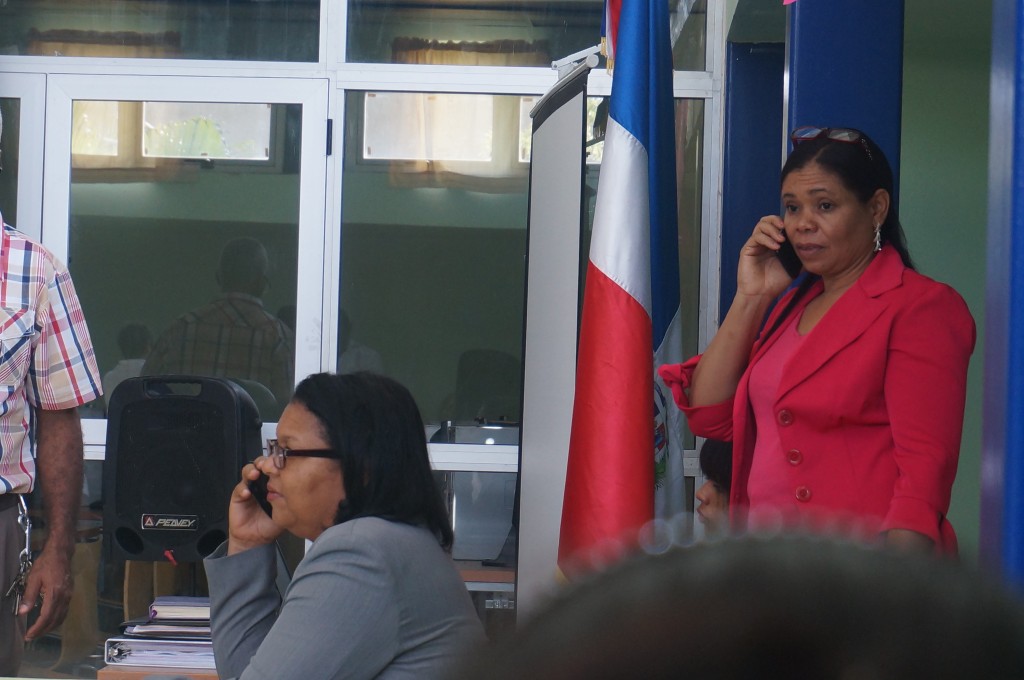
DSC02889 On our final evening in the DR, we came  together as a team of Ontario educators, DR  educators, the Director, the Superintendent of  their district and our host family ~ Pastor  Lopez and his family (his daughter and son-  in-law were two of our interpreters for the conference) to debrief about the conference and begin planning for next year. And although my trip was intertwined with many heart-breaking moments, it wasn’t until Louisa (their Superintendent) and Pastor Lopez shared their gratitude for our work that I actually felt the tears roll down my cheeks.

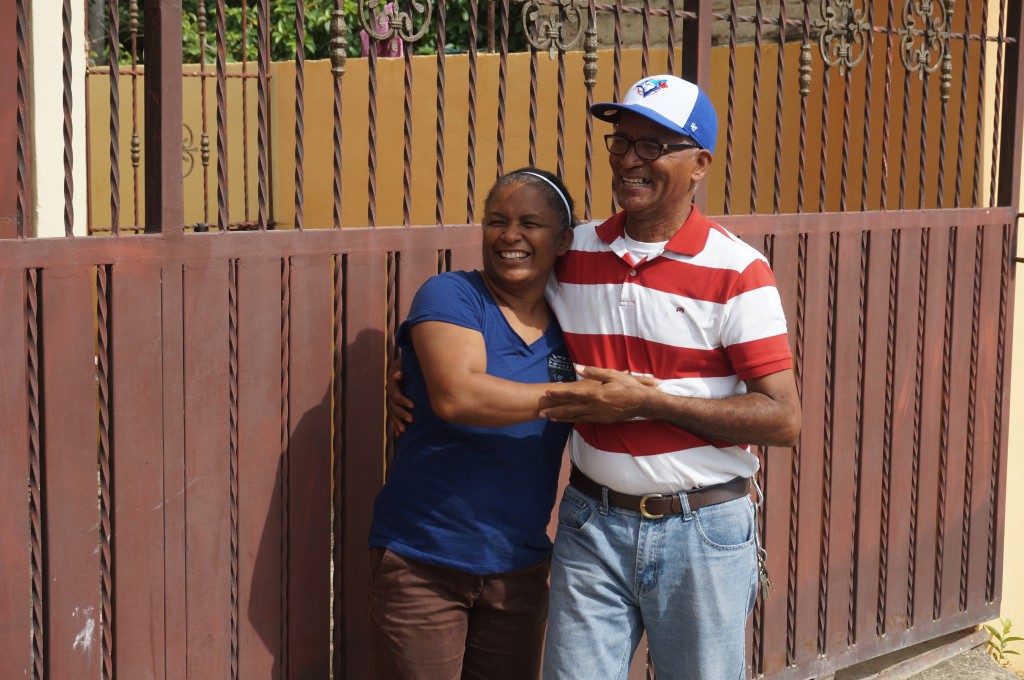
Pastor Lopez is a man who was asked to come to Hainamosa to build a church within this poverty stricken village and his response was to build a school first and then the church would follow. This is a man of action, a man who demonstrates his conviction in all that he does. It’s difficult for me to articulate how blessed I felt to be in his presence as he interacted with the people of his village, with the heads of government, with his family and with us ~ his Canadian family!  He was the guy who, when the speaker system wasn’t working for the closing ceremony, drove to his church disassembled his speaker system and brought it to the location of the conference. He would bring snacks and water to us as we presented and he stayed awake all night, to ensure our safety and the safety of his family while we stayed in his home ~ A man of action, not only words!  As we walked through the village one evening, droves of people came out of their shacks to embrace him. He delved into deep conversation about education with the Director and had the political finesse to carry on a conversation with Government representatives. When we presented our hosts with a thank you gift, he was thrilled with his Blue Jays cap and wore it that evening and into the next day.  He was still wearing as he waved to us as we crossed the security gates at the airport

DSC03063

Louisa, the Superintendent of District 10  spoke from the heart as she recognized and  thanked her DR educators for their  contribution. Louisa had her own daughters  take part in the conference (registration table,  break time etc) because she wanted them to  be a part of her world and see the hard work that is involved. She too knows that education is the answer to poverty in her country.  As she thanked us, she cried with gratitude for the partnership that has been developed and for our work in helping to build capacity within an education system that is so poorly represented with ongoing educator learning ~ something that we take for granted and something that some of our educators complain about having to attend.

Following our meal together, theDR teaching partners showered us with handmade gifts of flowers, jewellery and beautifully written cards.  By this point, mine were not the only tears flowing!

The last words came from Pastor Lopez and it wasn’t until that very moment that I truly realized the power in our trip and the work of TMA.   He shared that we are now part of a revolution.  Our work is indeed a revolution; a revolution without bloodshed.  But it does come at a cost. It came at a financial cost for us to travel, at a cost to our families who needed to survive without us, at a cost to us in terms of giving up personal comfort for a week and at a cost to us in that we placed ourselves in a community with the potential for violence.  He thanked us for our passion ~ a passion for not only education in our own country, but for a passion that recognizes the need to reach out to other countries.

downloadHe spoke about education as the tree of life and that our work is like the seeds from that tree.  We have shared our knowledge and planted seeds which will now grow in the hearts and minds of our DR educators, who will pass it on to others educators and their students.   We may not know the effects of those seeds, but we know that we have planted them!

And I can attest to the fact that we have planted those seeds in fertile ground. From the participation, to the discussion to the thought-provoking questions, our DR counterparts are more than willing, ready and able to lead the charge in their education revolution!

One doesn’t have to travel to another country to experience the need to revolutionize education.  What are you prepared to do, in your own backyard, in your own school community?

Come write with me….

From Nothing Comes So Much!!

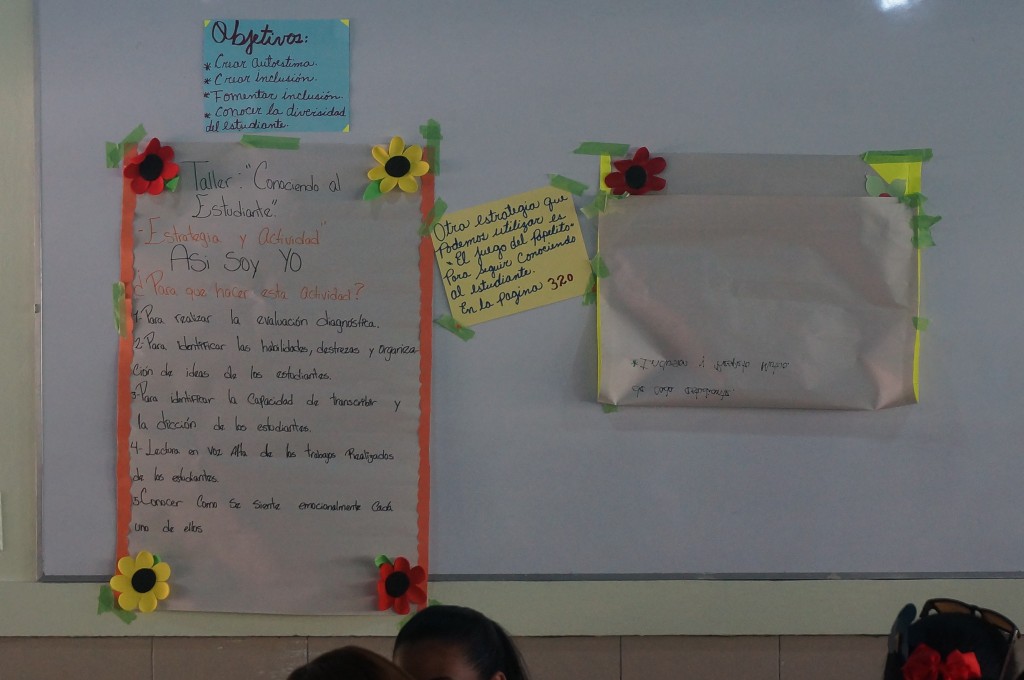
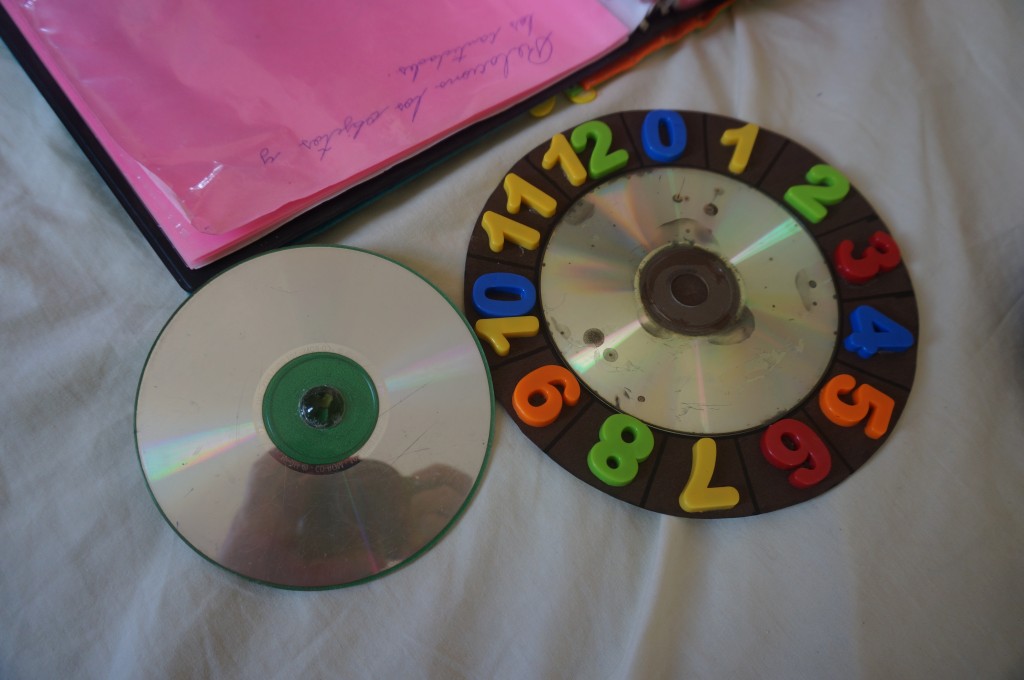
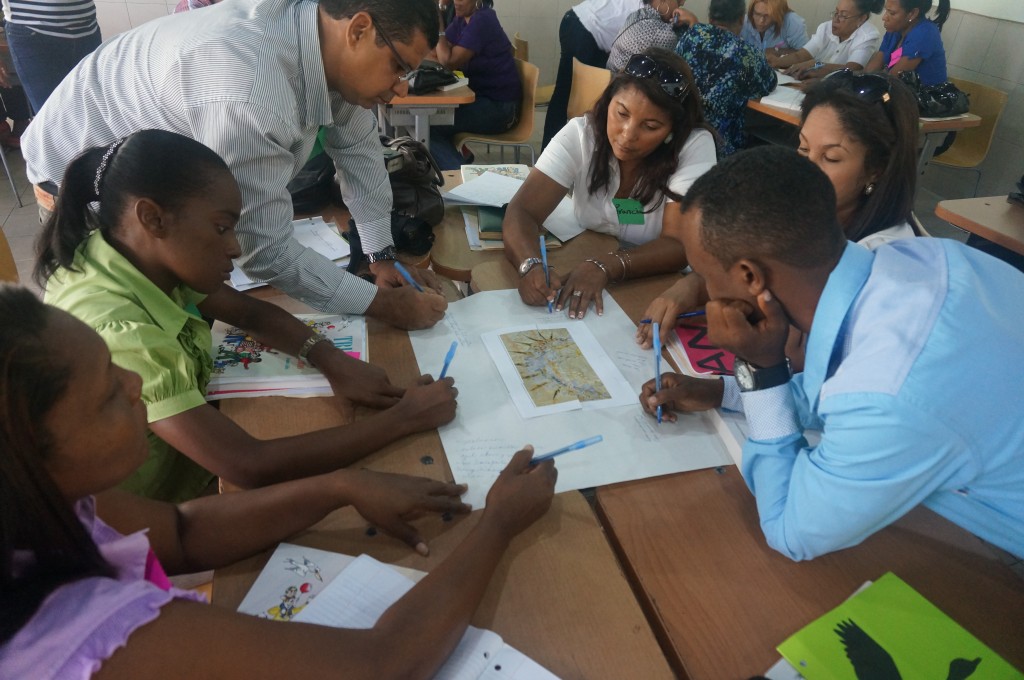
DSC02999 I will be honest in that I had no idea as to  what to expect in terms of educator  proficiency in the Dominican. I knew that  resources were scarce and that anything that  we brought and used needed to be easily  accessible and technology-free ~ a very different approach to my usual world of educator presentations. But it became apparent from our first meeting with our DR teaching partners that even though they had little they had an incredible talent for still ensuring a high level of creativity and professionalism.  At the plenary, two educators were invited to share what they had created and used as a result of last year’s TMA conference.  Their charts were enhanced with intricate hand-cut borders and handmade paper flowers.  The materials were made out of everyday objects which we wouldn’t think twice about discarding. One teacher shared a spinner that she had created for her kindergarten class which was made using two old CDs and a marble ~ ingenious!!!  The lack of purchased materials in no way prohibited these educators from creating thought-provoking and intellectually stimulating activities for their students.

DSC02981

Handwritten scraps of paper were generously shared and there was never a complaint about “not enough copies” or “quality” of the product.  There was such gratitude and the materials became secondary to the deep discussions about pedagogy.

There was also such incredible pride in anything which might be displayed.  One of the activities that I shared was the Visual Tea Party ~ an activity to create groups and to have students use their observation and then inference skills.  We used it as a prediction strategy before delving into a newspaper article. The educators were asked to brainstorm what they saw and then what the object might be. No matter how many times we shared the instruction, “just write whatever you see, neatness doesn’t count”, our DR friends took great pride in taking turns and neatly (in beautiful, straight-lined penmanship) writing their responses.  It was very interesting to compare the results of this activity with the results that we gathered when the Literacy team facilitated the same activity during our Journeys into Literacy sessions this past year.

On the final day of the workshop, as we were tidying up, materials that we no longer needed and were headed for the garbage, became treasures for these educators to share with their students.

I learned many lessons while in the DR, and one of the sobering lessons was how much I have taken for granted in terms of what is needed to impact teacher practice.  The bells and whistles of the presentation need to be secondary to the dialogue.

Thoughts??

Come write with me……

From Plunging to Pedagogy

teamPlace 9 female educators on a plane, headed  for the Dominican Republic to lead a  conference, for a week of complete  togetherness and watch what happens…..

Other than an initial meeting in January and  a brief planning session in March, I had no concept of what a week in the DR with 8 other strangers would entail, nor had I had a chance to get to know any of my travel companions. We had been well prepped with packing lists, an agenda for our stay and my teaching partner was a returning teacher, so I had peppered her with a variety of questions.  But like most life altering experiences, until you live it, you have no idea what is in store.

I’m not sure that you could have selected a more diverse team of educators ~ we ranged in age, marital status, years of teaching, family status, socio-economic status, ethnic backgrounds, job descriptions and above all else personalities. Each one of us had a unique reason for being on this trip and the more time we spent together, the more time we spent sharing our backstories and the journeys that brought us together.  I was in awe at the openness in which conversations occurred about children, parents and partners.  For relative strangers, some deep rooted emotions were brought to the surface in a relatively short time of being together.

To say that we were in close quarters, is an understatement and we very quickly became comfortable with sharing cramped spaces on a van, close mattresses in our large bedrooms, meals in various locations and of course a bathroom.  6 of us were in one room, sharing one bathroom and we didn’t have one issue ~ we all became adept at unclogging our toilet (due to very limited water) and the open door policy was quickly initiated.

But for all of our differences, we shared a passion for our work. Not only the work that we were doing in the DR, but our work at home. I loved hearing about how other boards deal with various scenarios and spent many hours listening to the stories of the other administrators as they shared the work that they are doing in their schools and the various levels of support from senior administration. They shared hiring practices, resource allocation, policies and procedures.  We talked for hours about supporting new teachers, supporting LTOs, pedagogical practices and supporting the needs of our students with special needs. For our younger team members, it was interesting listening to their perspective, not only on teaching, but about being young women who are so dedicated to such a cause.

At one point in our week, we had the opportunity to visit Nancy’s sister, Lucy!  As I’ve shared earlier, Nancy is the founder of TMA and her life story is one that needs to be made into a movie.  But her sister, Lucy, started the first preschool in Santa Domingo and to hear her challenges and successes, reminded me of our own Rose Walton, who also has such intense passion for early childhood learning.  I can just imagine the two of them sitting together sharing their philosophies and implementation strategies.

It became apparent that the strength in our team was indeed our diversity and how we managed to use that diversity to our advantage.

When choosing members of teams, do you purposefully look to create a diverse team?

Come write with me….

Teacher Mentors Abroad

tmalogo As I recall, it was a chilly December day when  I was surfing through various folders in First  Class (our Board’s communication system)  and I came upon the flyer for TMA ~ Teacher  Mentors Abroad.  Our ESL Learning Coordinator, Denise Taylor Edwards had posted the flyer and one of our Literacy Coordinators had taken part in the experience last summer. I read it and for some unknown reason decided to compile the necessary application requirements and send them off.

So here we are now 6 months later and I have recently arrived home from a week that has had the most profound impact on me, both professionally and personally and unlike most experiences which seem to beg for immediate reflection (which in my case means a blog post) it has taken me quite a few days of quiet reflection ~ away from everyone and everything ~ before beginning to string together my reflections in a coherent manner.

My plan is to dedicate my next few posts to the experience in the hopes that others may find something which resonates with them and their own experiences.  For the sake of context, here are a few of the bare bones components of TMA.  Teacher Mentors Abroad started 10 years ago as a joint venture between Nancy Lorraine, a native Dominican Republican (more about this incredible dynamo later) and Jose Lopez, a pastor in Hainamosa (one of the poorest villages in Santa Domingo).  The premise behind the initiative is that by bringing Canadian educators to the Dominican, together we could build capacity within the ranks of the DR educators and they can take what they learn at a week long conference back to their school communities.  Unlike our professional learning rich culture, the DR educators rarely are provided with the gift of professional development.

Up until this year, it was the Canadian educators who provided the components of the 4 days of workshops for school teams consisting of both teachers and administrators.  This year, there were 10 DR educators who, after being involved in the program for several years, were brave and confident enough to co-teach with us (a team of 9 women~ 8 presenters and our team photographer, who is also a talented educator) The partnership was a monumental step towards building capacity among the DR educators.

DSC02894

The conference included a politically charged  plenary, 4 days of workshops wherein the  participants rotated through sessions on  Reading, Writing, Mathematics and Know  Your Learner and a closing ceremony ~  complete with government representation and a wonderful dance routine from DR children.

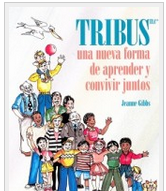
2015-07-29_2302The organization has secured a deal with the publisher of the TRIBES book and each participant received a copy of the Spanish version of the book. Each session effectively wove various TRIBES activities into the components, as the main thrust within the DR is to move educators into embracing a more collaborative learning environment for their students.  I guess it doesn’t matter how close to the equator you are ~ some of the educational challenges are the same.  But in our case, we can’t blame it on lack of professional learning opportunities.

Along with the conference, we had the opportunity to see the extremes within Santa Domingo ~ from the Colonial City, where Christopher Columbus landed and the first church built in the Americas, to the white sands of the beach to the depths of poverty in Hainamosa.  My usual travels to a Caribbean country had entailed a shuttle from the airport, off to the resort and then back to the airport.  Following this experience, I will be hard pressed to repeat that pattern. Once you’ve seen so much, it is impossible to forget.

For more information about TMA ~ Please check out the following website.  http://www.teachermentors.ca/home.htm


B5wN6m8IEAAXfBx For anyone who has been to a conference lately, I’m sure  that positioned on one wall or displaying their work on a  screen via a data projector there was a talented artist  capturing the key components, phrases and resources  with words, pictures and symbols in what has become  known as a Sketchnote.

As you scroll through Twitter Feeds, you don’t have to scroll for too long before you see a Sketchnote, with Sylvia Duckworth being one of the most popular sketchnote artists, but the list of others using this strategy is growing.

I find when I retweet one of those Sketchnotes, I receive a number of favourites and retweets, which speaks to the popularity of displaying information in this format.

About 10 years ago, as a board we were beginning to embrace Instructional Intelligence strategies, with two of them being mind and concept maps. Hallways were decorated with a variety of maps as we started to support the idea of having our students making their thinking visible.

When my daughter was studying for exams in both secondary school and university, she would create a concept mind as an effective tool for studying.

So, lately I’ve started to wonder if concept maps and Sketchnotes are the same thing with just a different name and then today I came across this article which outlines the differences.

Schools Need to Include More Visual Based Learning

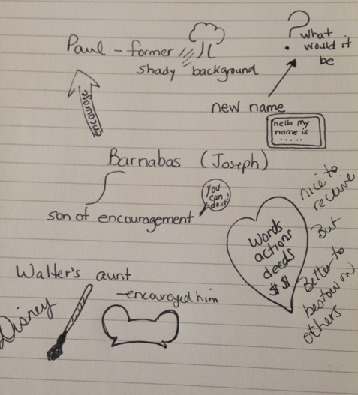
I also wondered about the power of the Sketchnotes for my own learning and what better way to quench my curiosity than to give it a try.  I’ll share that my first challenge was to work through my inability to draw. My maternal grandmother, my aunt and my mom have all been blessed with incredible artistic abilities.  I have a couple of “go-to” simple drawings that have gotten me by, but the thought of capturing my thinking in pictures (which others may actually see) is scary, to say the least.

The next challenge was to select the topic. As I don’t have any conferences in my immediate future, I decided to take a piece of blank paper and thin tipped marker to church on Sunday and “sketch” my way through the service.  My background knowledge on biblical references is still in its infancy, so I find myself learning something new each week.  Using Sketchnotes would be a good test to determine, not only my initial learning, but my ability to retain information.

So…… here goes!

The topic was “Encouragement” and the life of Barnabas.

2015-07-15_0011


My reflections on my first Sketchnote:

I took too long to think about what I wanted to draw, so I missed capturing some of the message.
I’m wondering how to better capture the train of thought. In looking at my notes I’m not sure that I could retell the story in the same order.
As it took me awhile to figure out how to capture “shady”, I will always remember that Paul, was once known as a shady character.
I will always remember that Walt Disney was encouraged by his aunt, who gave him his first drawing tool.

As with all new learning, this was only my first kick at the can.  I’ll keep you posted as I continue to explore Sketchnotes as a learning/teaching/sharing tool.

Have you thought about using Sketchnotes to capture your thinking?

Come write with me….

The Return of an Old Friend

wm_store_audioAs summer holidays officially begin, I find myself returning to one of my most favourite routines.  It starts with successfully recalling my public library username and password, followed by an online search with the following filters ~ “available”, MP3 version, known authors (Baldacci, Patterson, Brown to name a few)  and ends with the successful completion of all steps involved with downloading a selected audio book to my iPhone.

Ball cap holding back my ponytail, sunglasses poised, running shoes tightened, earbuds securely in place and I’m ready to hit the trails and press the play button.  The narrator’s voice, like that of an old friend, begins and within minutes I’m transported from the trails to the setting of the novel, as if no time has passed from the last time we were together.  And although my eyes are peeled on the trail, avoiding any potential pitfalls, my imagination is alive with visions of fishing charters, Monasteries, war-torn countries, exotic islands, state capitals and every other setting that my favourite authors select for their opening scene.  I find myself getting lost in the creative vocabulary and twists and turns woven into the phrases ~ hoping to recall some of them to use in my own writing.

These days my reading diet is relatively well rounded in terms of what I’m digesting and my intake methods.   My day usually begins with my social media snacking ~ Twitter and Facebook articles which I send to my organized lists, retweet or share.  My non-fiction “appetizers” include recipe books, magazines, newspaper articles ~ paper copies which I can skim and scan and quickly make my way through. For my professional reading (entrée) it’s good old-fashioned paper copies, with new spines ready to be cracked, which I find myself wanting to re-read, highlight and fill the margins with connections ~ these take much longer to digest.

So, in continuing with the reading diet theme, I would have to classify my audio books as dessert. The plot lines are predictable; usually including a good guy, a bad guy, an investigation, a love interest, a plot twist and a relatively happy ending.  And just like dessert is one of those guilty pleasures when it comes to my daily intake of food, my audiobooks bring great pleasure to my summer hikes.

The value of listening to Audio books has certainly garnered mixed reviews.

Your Brain On Audio Books: Distracted, Forgetful, And Bored

http://www.fastcodesign.com/3026224/evidence/your-brain-on-audio-books-distracted-forgetful-and-bored

The Benefits of Audiobooks

http://www.soundlearning.org.uk/benefits-of-audiobooks.aspx

Knowing how much I enjoy this summer pleasure, I have to wonder why it stops when September rolls around.  Maybe this is the year that I continue to treat myself to audiobooks well into the school year.

Do you listen to audiobooks?

Come write with me….

Movies and Memories

***** Spoiler Alert*****

If you haven’t seen Disney/Pixar’s “Inside, Out” yet ~ you may want to wait and read this post afterwards!


summerblockbustersMy first date was a city bus ride downtown to see the  summer blockbuster Grease with Peter Kay.  We had just  graduated grade 8 (hence the city bus) and although I  had already seen it a week earlier with a group of friends,  I enjoyed it just as much the second time around.  I  think it was at that point in my life that looking forward to seeing an annual summer blockbuster movie became a tradition.  Some of them are more memorable than others, depending on who I watched them with and the quality of the impact of the film.  As my own children became old enough to sit through a feature length movie, another summer tradition was born.  We would anxiously await the spring commercials advertising the upcoming children’s movie and then, once school was out, we’d enjoy a family dinner followed by a movie.  Around that time Disney, Pixar and Dreamworks emerged as companies who were producing family films which couldownload (1)d be enjoyed by young and old alike.  Toy Story, Finding Nemo and Shrek were so skillfully written that as the children were laughing at the high jinks of the main characters, the parents were laughing at the double meanings and adult humour.

 

As my kids grew up, our summer tradition of family movie night became a distant memory.   So I was ecstatic when, last week, my daughter, now 25, invited me to go and see this summer’s family blockbuster, “Inside Out”. I had watched the commercials on TV and was expecting a similar theme to that of Shrek ~ entertainment for the children and adult humour for the parents.

What I hadn’t expected was that this return to family blockbuster viewing was going to take me on an emotional rollercoaster of memories of my own.  As I watched the Emotions (Joy, Anger, Disgust, Fear and Sadness) work together to help Riley maintain her islands of Friendship, Family and Imagination, only to have them crumble,   I found myself remembering a multitude of wonderful memories that I imagined would be a part of my daughter’s core memory bank.

images (1)

As the movie went on and Riley’s islands continued to crumble, I found myself wiping away tears, swallowing away a painful lump in my throat and sneaking sideways glances at my now young adult daughter, longing to return to the days of her childhood and those of her two brothers.

As with all well-crafted story lines, the ending took me by surprise.  Throughout the movie I found myself cheering for Joy, confident in my thinking that Joy’s quest to keep Sadness away from Riley was the noble thing to do ~ thinking that as a parent that was my job too!  But it wasn’t until Joy’s shedding of a tear and her realization of the complexity of what factors were involved in making those interactions worthy of being core memories (which needed a combination of all emotions) that it hit me.  Without sadness, joy cannot exist!  We need to embrace each emotion, even the sad ones.

So, in embracing the sadness as I long for the summertime traditions when my children were young, I look forward to the joy of creating new summertime traditions as they transition into young adults.

Who would have thought that an animated children’s movie could have brought such clarity and meaning?