
Highlighting the work of others!

images (1) I have experienced first hand the power in having others comment on my blog posts. Their  words add another rich dimension to the power of the writing and sharing process.  So, for the  month of June, I’ve decided that my posts will be focusing on the blogs of others.  My plan is to  highlight the work of other bloggers and share my comments, both within their blogs and within  my own.  I would like to challenge others to do the same ~ find a post that resonates with you  (either because you agree or disagree with it) and share  your comments.  You will certainly  brighten the day of the blogger, as you push yourself to articulate your thinking in a public forum.

I’ll do my best to share the work of a different blogger each day.  For those of you who have recently entered the world of blogging as a result of some recent inspiration, I’ll be checking in on you regularly in my quest to highlight your work.

My first comment is on Ron Baker’s site.  I’ve never met him in person, but I had the pleasure of being in the audience for many of his sermons when he was the Associate Pastor at Forest City Community Church.

Here is the link to his latest post ~ Regrets, I’ve had a Few…

http://www.ronbaker129.com/regrets-i-have-a-few/

Here is my comment!

I can’t imagine that there’s a person out there who cannot relate to the notion of regret; whether it is promises broken, harsh words spoken in anger, rage or jealousy or lost opportunities.

In packing a suitcase, we get to purposely choose what we put in it, though. I wonder if we need to be more intentional about the stories and feelings and the emotional baggage that we select. What if we selected good memories and reminders of the all the times we helped, inspired or motivated others? Sometimes, populating our life with the positive helps ease the pain of the negative.

As for forgiveness, I can remember the exact day when it finally hit me that regardless of all of all of my past and probably future transgressions, the One who really mattered had already and will forevermore forgive me. It was the 2014 Easter service at FCC. One never knows when or how it will happen, but you sure as heck know when it does happen because there’s no turning back.

images (2)

I love how you connected your thinking to a song ~ something that I often do. So, I went to the lyrics from “My Way” and decided that when my life is over and someone opens my suitcase I hope that they’ll see evidence that,
I’ve loved, I’ve laughed and cried
I’ve had my fill, my share of losing
And now, as tears subside, I find it all so amusing!
Thanks for sharing such a thought-provoking post!


“Still” Leading Innovation Cultures

images Today on Facebook, Michelle Cordy shared a link to a    recent video featuring Simon Breakspear, a speaker at  the Ontario Leadership Congress Spring Symposium  2015.  As I have a tendency to do, I veered from the  initial video to the various related links on the side tabs.    There I found this 2010 video from Simon Breakspear, where he focused on the topic of Innovation and how we, in education, need to ensure that we are preparing our students for their future.  If you have 45 minutes, I would highly recommend that you watch it as he is an effective presenter who incorporates humour and data to make his point.

https://vimeo.com/19762988

He is passionate about innovation for learning and how other sectors are embracing innovation for change. Keeping in mind that this was recorded in 2010, his information about the number of Twitter users and other social media platforms is outdated and I’m sure that today if he asked about iPhone use, the response from the audience would be greater.

Breakspear challenges his audience of educational leaders to embrace innovative classroom environments where inquiry and grassroots ideas are encouraged and supported ~ where teachers model lessons after TedTalk styles (18 minutes or less) of presentations and where protocols are in place to support rich cognitive dissonance.

I loved everything that he was saying and yet at the same time, I became frustrated and somewhat saddened at the fact that we’ve been sharing this same message for at least 5 years and yet many of our learning environments have not evolved at all.  I wonder what it will take for more educators to embrace innovative practice.  I wonder how we can support our educational leaders to be more innovative.  When will we truly appreciate “positive defiance and amplify what is going well” in places of innovative practice?

I wonder when we will reach our Innovation tipping point in individual schools, in a community of schools, and finally in our school board.

images (1)

The need for change is obvious ~ our students are arriving at the doorsteps of our schools with a different toolkit and we have a moral imperative to prepare them for a future that is very different from our current world.


I’m hopeful that five years from now we will be celebrating more innovative practices throughout the world of education (classrooms, leadership, etc.).

I can’t help but wonder if we’ve just become more innovative in sharing the message about how we need to be more innovative….

Thank You!

Day 31

images Well I made it ~ one post a day for the month of May.  Thirty one posts in total, with a range of topics, each one  somehow connected to a daily event, a thought or a  memorable encounter. A few days ago I shared the  unintended outcomes of this writing journey in the form  of a Top Ten List, but for my final post, I wanted to share  evidence of the intended outcomes.  As many of you know, I have been blogging for over 5 years and like most of us who have hit the Publish button, we never know if anyone is actually taking the time to read what we’ve shared and if they do, what do they think about it. Has it resonated with them?  Will it have an impact on their practice? So as a part of this “Once a day” challenge I have been tracking evidence of “readership”.  Our friends in the Research and Assessment department will be thrilled.  The collection and analysis of data usually leads to a reflection on one’s practice and if necessary, a change in one’s mode of operation.

As I reflect on the data that I’ve collected, the first thing that resonates with me is the fact that without each and every person on the following lists, my blogs and the time spent blogging would have seemed less than effective.  I’m hoping that everyone who sees their name reflected knows how incredibly thankful I am for their participation in this challenge.   Whether it was a Twitter Favourite, a Retweet or a Reply in the form of a comment; a Facebook comment or “like” or a comment on my actual blog site, each and every written connection provided me with enough feedback and confidence to keep writing. This experience has solidified my thinking that writing is indeed a social learning experience and that when we offer our students the opportunity to write we need to create the conditions whereby the audience is more extensive than just the teacher.  We also need to ensure that our students learn to incorporate emotion, contrast and controversy into their writing, so that others feel compelled to respond. But beyond the connection to the classroom, we as educators need to also embrace the power in writing and respond to each other, as an extension of our personal and professional learning.

I initially thought that my thinking would be pushed by the challenge of writing on a daily basis; little did I know that it was through the thought provoking comments that my “blog following buddies” selflessly shared that the true depth of learning would occur.  And for that, I send my sincere appreciation!

Twitter-for-authors

Thanks to the following educators and authors who commented directly on my blog.  Some of them even commented more than once:

Dawn Telfer, Carla Matos, Rick Pardo, Sue Dunlop, Joe Sheik, Rose Walton, Marsha Kelly, Cliff Kraeker
Doug Peterson, Dan Pontefract, Annette Gilbert, Catherine Zeisner

The following Twitter Followers Retweeted with a comment.  Some of them commented on a regular and even a daily basis.

Sarah Sanders, Robyn Turgeon ,Michelle Koop  ,Jen Aston ,Annette Gilbert ,Sharon Marshall,
Dawn Telfer, Sue Dunlop, Johanne St. Croix, Doug Peterson ,Ron Baker, Tammy Aiello, Marsha Kelly
Carrie McEachren, Chris Gunter, David Fife ,Ryan Matthews ,Maureen Murphy, Heidi Solway
Joe Sheik, Sabrina Tyrer ,Melissa Tuttle ,Madame Vint, Matt Tenney, Erin Mutch, Keith Tomasek
David Carruthers, Michelle Cordy

There was an extensive number of retweets and favourites. Thanks to all who felt that certain posts were worthy enough to recognize.

Thanks to the following Facebook Friends who used that social media platform to send a comment or two.

140964-141817

Denise Taylor Edwards, Scott Hughes, Dawn Ruddick, Donna Clark.

There were numerous likes on Facebook, including my own family, who up until now were not overly connected to my writing!

My self imposed daily writing challenge may have come to an end, but like all of those experiences which feed our souls and our minds, I doubt that I will return to my only once a month writing habit. I would imagine that I’ll find myself sharing, reflecting and hopefully inspiring others to share via my blog on a weekly basis at the absolute minimum.

Thanks so much for coming and writing with me….

From Obstacles to Opportunities

Day 30

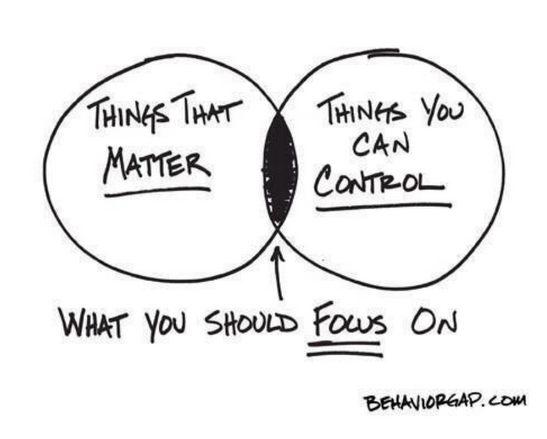
2015-05-30_1003 From Obstacles to Opportunities is not a new or earth  shattering notion and it’s one that I’ve written about in  the past, but this morning during my morning Twitter  scroll, I came upon this graphic retweeted by Justin  Tarte (courtesy of behaviourgap.com) and it provided an  effective visual as an anchor for a few of my musings  from the past couple of days.


Obstacle:

As a result of current labour unrest, elementary teachers will no longer be administering the Provincial EQAO test to our students in grade 3 and grade 6.  Many of our schools (especially our OFIP and low performing schools) have had an intensive support system wrapped around them this year. They were anticipating an increase in their results as a tangible measurement of how hard they have worked.

Opportunity:

I’m wondering if in the absence of a Provincial test, which is only administered to grade 3 and grade 6 students, schools take this opportunity to create a more school based measurement of their success. Is there a way for them to measure how teachers feel about the change in their practice?  Is there something that, as a school, they create to measure students’ attitudes towards learning? In some instances, educators felt that EQAO did not adequately measure what they felt was important. Now is their opportunity to personalize it to meet the needs of their individual school community. Schools know what is important to them and they can control how they will measure that success. That’s where their focus should be.

Obstacle:

As a result of high profile media story about dress codes, secondary administrators are more leery than ever about social media and therefore a session that I facilitated on Friday, with TVSSAC, needed to be responsive (in the moment) to their assumptions.

Opportunity:

Whenever we are provided with the opportunity to take our “canned presentation” and modify it to meet the needs of the group, we grow as presenters and educators.  But in this particular instance, I had not anticipated the opportunity to stress the importance of populating social media with as much positive press as possible, so that when the outside world “Googles” your name or your school’s name, they will see the school shows, the Track and Field results, educators winning awards, outstanding examples of student and educator work before they see the negative press about exposed undergarments.  Friday was an opportunity to jump on my soapbox and share that school administrators can control the positives that they share on social media and they can share those things that matter to them and their school community.  That’s where their focus should be.


Obstacle:

As a result of the recent Provincial and Board focus on mathematics, not many of our elementary schools have a literacy goal and schools need to ensure that their professional learning is in alignment with their goal.

Opportunity:

The new landscape within our board has provided us with the opportunity to modify, refine and evolve our practice. No longer are we in a position to have to worry about turning school teams away. Our new goal is to create professional learning series where all schools will see value in the learning regardless of their school goal.  We are extending the learning beyond reading and writing.  This new world has also created opportunities for the literacy team to more purposefully work within other portfolios. We all know that “Literacy Matters” and that without the ability to read and write students will not be successful in any other subject areas, but we are now provided with more opportunities to articulate that and when those opportunities present themselves, we can have a stronger impact. We can control how responsive we will be to learning needs of the system and embrace how our learners are changing as they incorporate the world of mathematics  and we know that literacy matters, so that is where our focus will continue to be.

2015-05-30_1010

What recent obstacles have you turned into opportunities?

Come write with me….

Tangled Trails

Day 29

Like_Vines_We_Intertwined_by_OMGrawr123 Last night was one of those perfect nights for a hike on  the trail. Following the previous night’s rain, everything  was lush, green and alive.  As I meandered along the  pathway I couldn’t help but notice how, in a world  untouched by man, many of the plants have already  become intertwined with each other.  The off shoots of  the grapevine vines were wrapping themselves around the small trunks of maple trees, spider webs were formed between the branches of small elm trees and ground cover ivy was using the stalks of stronger plants to hoist itself to greater heights, closer to the sunlight.

I marveled at nature’s interconnectedness as plants used the location, height, texture of others to strengthen themselves. The sight was such a juxtaposition to the manicured gardens that I passed on my way to the trails.

670px-Start-a-Flower-Garden-Step-1

As I continued to walk and reflect on my day, I couldn’t  help but wonder if we, as a system of educators should  be taking a lesson from nature.  How often do we reach  out and rely on the talents, expertise and advice of  others?  Do we model ourselves after a natural  environment where the overall landscape is intertwined  or are we more like a well-groomed garden with individual plants surviving on their own?

What are the barriers (either self-imposed or imposed by the system) to thriving in an environment where we truly believe that we are stronger by being purposefully connected to each other?

Come write with me….

Top Ten List

Day 28

images (4)

There have been many unintended outcomes of my “One  a day in the month of May” blog challenge and in  recognition of David Letterman’s recent exit from late  night TV, it seems appropriate to share them via a top ten list.


So here goes…

As a result of blogging once a day for the month of May:

Number 10 ~ I have gained a number of new followers on Twitter. Not that building my number of followers is important, but as soon as someone follows me, I check them out and if they seem interesting, I follow them back.  I’ve expanded the scope  my “following list”.

Number 9 ~A new member of our Learning Support Services team takes the time each morning to comment. I’m learning about her as an educator and what is relevant and important to her work.

Number 8 ~ I have gained an extreme respect for my colleagues who have taken the time to comment to various posts. So many of our educators effectively reflect on their practice.   I wish more of them wrote on a regular basis. I would love to learn more from them.

Number 7 ~ Following a conversation with our Director about a process we are using for reflection and forward planning for our team, I was able to send her two links to posts in which I highlighted the book that I used. She loved the posts and the book and is now going to buy it and use a similar process with the senior team.

Number 6 ~We now have a number of “new to blogging educators” within Thames Valley. I hope that they find it beneficial to their practice and continue to challenge themselves to post.

Number 5 ~ I have had conversations with other educators who have experienced similar challenges to the ones which I’ve chosen to highlight and they thanked me for my honesty. This is a great motivator for continuing to share.

Number 4 ~ Each day starts with a positive retweet, comment or favourite.

Number 3 ~ My family is now reading my posts and offering suggestions for future topics. Friends, not in education, are reading my posts and drawing connections to their lines of work.

Number 2 ~ I was able to meet my goal of posting once a day. I wish I had the same commitment to exercising once a day….smile!

And the number one unintended outcome of blogging once a day is….

 There is a now a running joke that if anything profound is shared at the board office then it is fair game for tomorrow’s post!

A heartfelt thank you to everyone who has been along for the ride!

images (5)

From Silence to a Storm

Day 27

storm The house is quiet, with the only sound being the  clicking of my fingernails on the keyboard on my laptop.  There is no extraneous noise from the television, as the  full bloom of the ever growing maple tree has impacted  the satellite signal. As I begin my evening ritual of  scrolling through my Twitter feed and Facebook pages,  the silence is suddenly broken by a loud crash of thunder and the room lights up with a streak of lightning ~ a much needed spring shower is upon us.   As if purposefully planned (or one of those serendipitous moments)  I come across a reference to Susan Cain’s Quiet, “Everyone shines, given the right lighting”.  Yesterday in our Cognitive Coaching session, we were also reminded that “the person we don’t hear is the person we need to hear from” from the same book.  As someone who, at times, can be the quietest at the table, I begin to wonder if we appreciate those quiet voices and if not, how can we get better at it.

Within each team, there is invariably members whose voice we rarely hear in a public forum. I often wonder if we dismiss them and their ideas without ensuring that we are providing various platforms for them to feel secure enough to share.  This year in our work, we included back channeling opportunities for participants to use to share their insights, thoughts and ideas. To be honest, we did not receive significant input.  So, it’s back to the drawing board to explore other platforms.

As I reflect on other teams that I have had the pleasure of working with, I have learned how important it is to respect those members who may not initially share and who need wait time.  Once that structure is build it to dialogues and discussions, the end result is always much richer.

When we explore our school communities, what strategies do we have in place for our “quiet” students, staff and parents?  As a school principal, one of the ways that we used to gather input from our broader community, was to hold a Community Forum.  Our invited guests were treated to a meal, some highlights about the school and then we put them to work and asked them a variety of questions.  In hindsight, I’m wondering how that opportunity could have been extended to community members who would have been reluctant to share in such a setting.

What supports do we have in place for staff members who may be reluctant to share at staff meetings or at network meetings?

And most importantly, how do we support our “quiet” students?

images (4)

Come write with me….


When the Conversation Ends, the Thinking Begins

Day 26

download (2)Yesterday I had the opportunity to join my colleagues in a Cognitive Coaching session, effectively facilitated by Penny Ballagh and Denise Overall. I will admit that I arrived at the session rather skeptical about the potential impact that it would have, as I’ve been quite heavily involved in various facilitation opportunities aimed at supporting colleagues with their “Problem of Practice”. The first sentence in my journal was, “I’m craving something to push my thinking”. It became evident, quite early on, that these educators  were about to engage me and indeed push my thinking for the rest of the day.  As I look back through my journal, my notes are filled with the names of “must read” books, highlighted in yellow, boxed in phrases which I will undoubtedly be including in future posts or professional exchanges with others and various arrows and other markings used to note strong connections to past, present or future work with our Languages team and Instructional Coaches.

Some of the most noteworthy phrases included:

When coaching you are “tapping into someone’s cognitive universe”

As a cognitive coach, you are ” a mediator of thinking and your role is to send them out smarter than when they walked in”

The heart of coaching is to “light up what they can’t see on their own in order to see the dark corners”

“If we are too busy to reflect, we are too busy to grow”

and my favourite….. WAIT and SEE = Why Am I Talking and Stop Explaining Everything!

Wait-And-See-Sized

The added bonus to this session also included well situated facilitation activities such as the “Assumption Card Stack and Shuffle”, “Appointment clock” “Discuss and Teach”, “Gum and Chew” and “Community Circle”.  With each passing activity, a greater sense of safety and trust was created with the group and hence the dialogue was richer. I can’t wait to share some of these with the Languages team.

When it came time to practice our coaching skills, I was thrilled that my partner was truly thankful for my attentive listening, followed by some well placed questions which will hopefully assist her as she embarks on a portfolio changing proposal.  She has asked that I check-in and see how her new venture is going ~ something that I will definitely do!

Although the formal conversations ended at 4 pm, the thinking continued on into the night, with a reflective email exchange with our Director and some sharing about the day via Twitter direct message with a colleague.

Yesterday was one of those unexpected learning treats!  I started the day craving a professional challenge and ended the day with my appetite more than satisfied!

When was the last time you were pleasantly surprised at a professional learning session?

Come write with me….


The Gift of Feedback

Day 25

key As we embark on our final month of this school year, I can’t help but wonder how we can  engage our students and our broader school community, with whom we’ve been with for the  past nine months, in a process of providing us with feedback in order to assist us in reflecting on  our practice. As effective educators, we know the power of feedback and take every  opportunity to provide our students with as many informative next steps as possible.  Don’t we  owe it to ourselves to also be on the receiving end of such a gift?

If the intent is to improve our practice and ultimately the learning environment for future classes, what questions should we ask?   What information is going to make the greatest impact? How should we ensure that students and their parents feel safe providing authentic, honest answers?

How powerful would it be for administrators to model that same mindset when it comes to seeking and then acting upon constructive feedback received from their staff and broader school community?  What information from a staff would help an administrator to enhance their leadership skills as they continue in the role. Once again, creating the conditions for safe sharing of information is imperative.

In the interest of transparency and authenticity, if I’ve challenged others to seek feedback, then my next step is to develop some thought provoking questions for my system staff.   Look for an update in a future post.

What are the challenges to seeking feedback?

Come write with me…

Marshmallow Musings

Day 24

download

This past weekend, we enjoyed the first of many cottage fires which always include the  mandatory marshmallow roasting. My daughter has taken the art of roasting marshmallows  and elevated to a party for one’s taste buds.  A few years ago she stumbled upon the idea to  insert a Rolo caramel in the middle before roasting and the result was decadent.  This year, her  latest idea was to roast the marshmallow just until you can remove the caramelized outer shell  and then fill that shell with Caramel sauce and/or your favourite liqueur.  If there is a level beyond decadent, this taste sensation certainly meets it and then some.

As I became lost in the flames of the fire, I started to reflect on my most recent (and definitely more healthy) encounter with marshmallows and how the debrief of that activity caused me to question my thinking about experts and the time they use in planning.

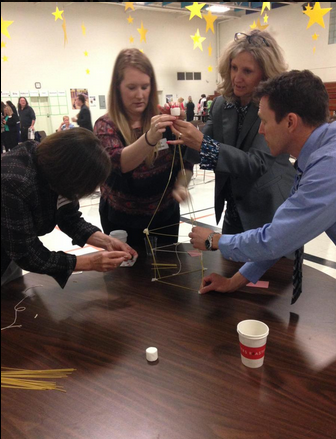
A few weeks ago, as a “Minds On” activity for our Innovation forum, we were placed in teams of four and provided with  18 minutes, 18  pieces of dry spaghetti,  30 cm of string, 300 cm of tape and a marshmallow, with the task of building the tallest structure which would support the marshmallow.  As has happened time and again with this task, groups built a variety of structures and creatively used the string and the tape to support the desired height.  A few groups decided to support a small piece of the marshmallow as opposed to the whole thing ~ the rules did not specify how much needed to be supported.

marsh

This task was highlighted in a TedTalk video where Tom Wujec shared with the audience that  the group of participants who were able to build the highest structures were children in  kindergarten because of how they embarked on the task.  The children dove right in; no  preplanning, so scale drawings, no prototypes.  They would try something and if it worked they continue to add to it, if not they would start again.  The data shared outlined how “educated adults” were not able to reach record breaking heights because they spent too much time in the planning phase and not enough time in the actual “doing” phase.

The information from this study is in direct opposition to the work of Katz in Intentional Interruption where he states that experts are faster than everyone else in everything except the planning phase. Experts spend more time planning than others.  We use the importance of planning as the basis for our work and had school teams spend a great deal of time crafting their inquiry before diving into the other components of their collaborative inquiry.

I’m not sure if the marshmallow activity is enough to have us change our work, but like all contrasting information, it certainly has given me cause to stop and reflect.  Maybe one of Kaitlyn’s caramel filled roasted marshmallow treats will bring some clarity.

In our current age of information, there is a greater opportunity for contrasting information to come your way.  What do you use as your filter?

Come write with me…