
Blooming Innovation

Day 23

IMG_2677 Spring brings images of rebirth as fall embedded daffodil and tulip bulbs emerge from the once  frozen ground and decorate gardens with yellow, red and orange.  The green thumbed  gardeners get giddy with excitement as they prepare the soil and plot the plunking of plants  into purposefully chosen places.  Their vision of how the colours, shapes and sizes of each  intentionally selected plant will bloom throughout the coming seasons is perfectly timed, as if  orchestrated by a symphony conductor.  Visions of Fantasia just popped in my mind.  Like  many others, I have my favourite spring blooms, all of which come and go much too quickly, but none so quickly as the magnolia tree.  It was just a few days ago when I captured this tree, on my way into the education center, with my phone. Today as I left, the tree looked very different as the blooms have made way for the thick, lush leaves which will shortly provide shade.  It must be “spring fever” which led me to stop and capture this quote as I scrolled through Facebook today.

Innovation and best practices can be sown throughout an organization ~ but only when they fall on fertile ground.


As an organization we have been exploring innovation as a means to promote engagement among all of our learners.  What intrigues me about this quote is that the importance of best practice is also noted. At times I wonder if in our quest to embrace the latest, most innovative strategy, we forget, like those plants that need to be firmly secured in healthy soil, that any strategy needs to be grounded in good solid, evidence based pedagogy.

The second part of the quote reflects the concept that the culture that is created is paramount to any successful implementation. What makes the ground fertile in an organization?  I wonder, if like those dedicated gardeners who spend time preparing their soil, how much time we spend preparing and feeding our “soil”?  Do we encourage discourse?  Do we embrace idea germination at all levels of the organization? Do we celebrate failures as first attempts at learning?

When scrolling through quotes, what draws you to stop and reflect?

Come write with me…..

Be Brave

Day 22

Be Brave….

images (3)This morning on the way into work I was in the mood for a little Sara Bareilles and so I listened to “Brave” a couple of times. My favourite line is,“I wonder what would happen If you say what you wanna say and let’s the words fall out?” which seems to fit well with my current blogging treadmill.  Over the past three weeks I have been uncensored as I share my thoughts, interactions and reflections in an effort to encourage others to do the same. I purposefully end each post with a question and an invitation to “Come write with me”.  I’ve been pleased with the comments on Facebook, Twitter and within the actual blog.  I’ve also been thrilled with those who have engaged in conversations with me about specific posts which resonated with them. I encourage comments because I am genuinely curious about what others think and their experiences.  I continue to learn so much from others.

We tend to throw around the phrase that “words have power”, but they only gain power and strength if, when effectively strung together, they create the conditions for others to think, to learn or to act.

IMG_2684

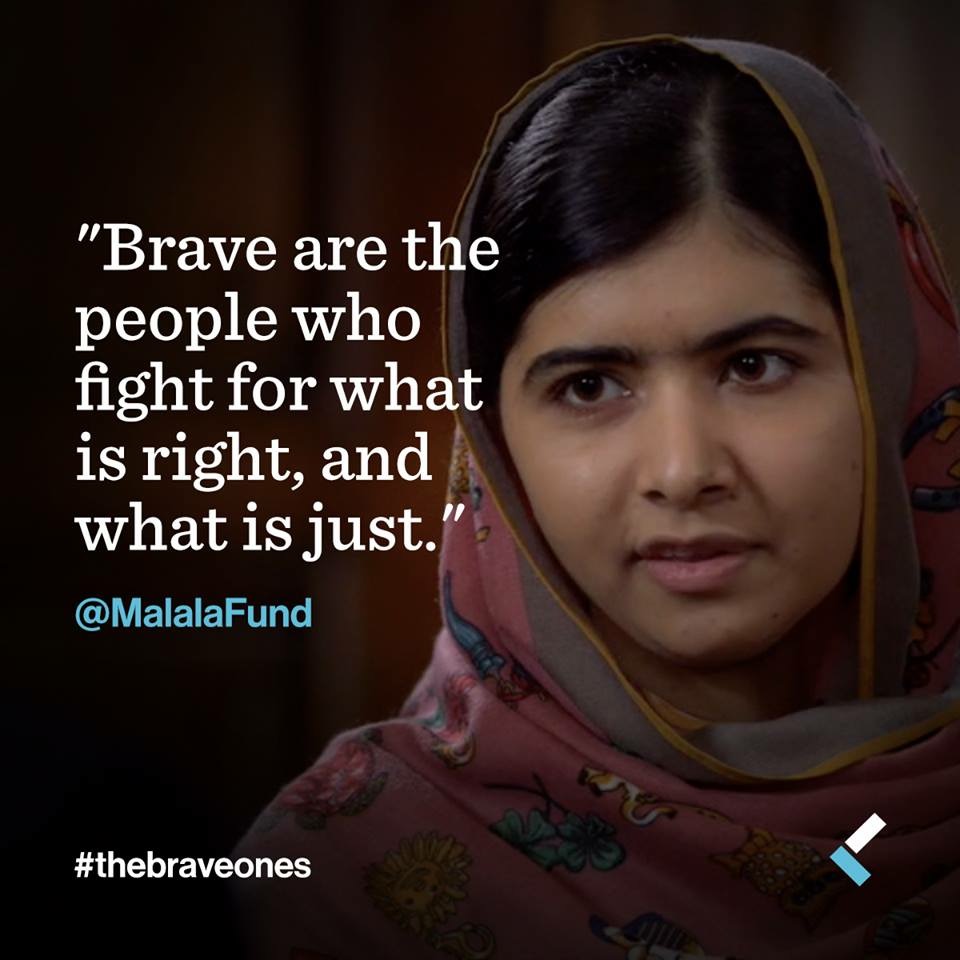
Malala Yousafzai is one of the Brave Ones who did let  her words fall out and the result was life changing, not  only for her but for every life that has been impacted  because she would not be silenced. In an effort to silence  her, by shooting her while she was traveling home on a  school bus, the Taliban accomplished the exact opposite.

In her own words, “out of the silence came thousands of voices”.

My hope is that your words are not “kept on the inside, with no sunlight, because sometimes the shadow wins”.   If we want change, we need to be brave enough to share, to engage in conversation and face our fears.

What are you brave enough to share with others who deserve the gift of your thoughts?

Come write with me…..

What Makes a Good Day?

Day 21

images (2) How does one evaluate a good day?  For me it is usually  connected to learning something new or having someone  push my thinking.  In using that standard of measure,  today was an outstanding day!  It started with a meeting  of passionate, dedicated administrators who are  committed to supporting the learning of their colleagues  in the area of French as a Second Language. As we were taking part in a provincial webconference, we were learning about initiatives that other boards are using in the same quest to mobilize knowledge about FSL.  My first nugget of the day was to learn that QR code stands for quick response.  Although I use QR codes and even know how to create them, today I learned their full name. Something small… but new learning! Our discussion this morning was very intriguing and I was once again reminded how important those tough “how do you change the world” discussions are.  Although we didn’t change the world, we did come up with some short term, manageable solutions to support our colleagues.  This group has committed the gift of knowledge and time to their fellow colleagues as we work towards positive hiring practices. I was honoured to work with them today!

As my day continued, I was pleased to be invited to a presentation about a new assessment/documentation online tool. Although the technical aspects of the program were not new or anything that I haven’t used in the past, the potential for this program to significantly impact how teachers document learning, how they communicate with parents and how students can be active participants in selecting what is chosen for assessment was exciting.  My thinking was definitely challenged as I started to think about a possible implementation of this new tool.  I appreciate such opportunities when they come my way!

And it’s only noon by this point in the day….

In the afternoon, the old brain cells continued to get a work out as our Board Improvement Plan committee tackled big system questions about measuring Achievement and Learning  as well as Instructional Leadership. I’m not sure that our intended goal was met, but I left the meeting with a renewed sense of the power of ensuring that the conditions are set for learning conversations. I appreciate any opportunity to have my thinking challenged and to engage in conversations that challenge the thinking of others.download (1)

Learning is such a social experience and I was reminded of that today as I had the opportunity to interact with such a variety of colleagues on a variety of topics.  Thanks to everyone who had an impact on making today an outstanding day!


How do you evaluate a good day?

Come write with me…….

You Go to the Scene

Day 20

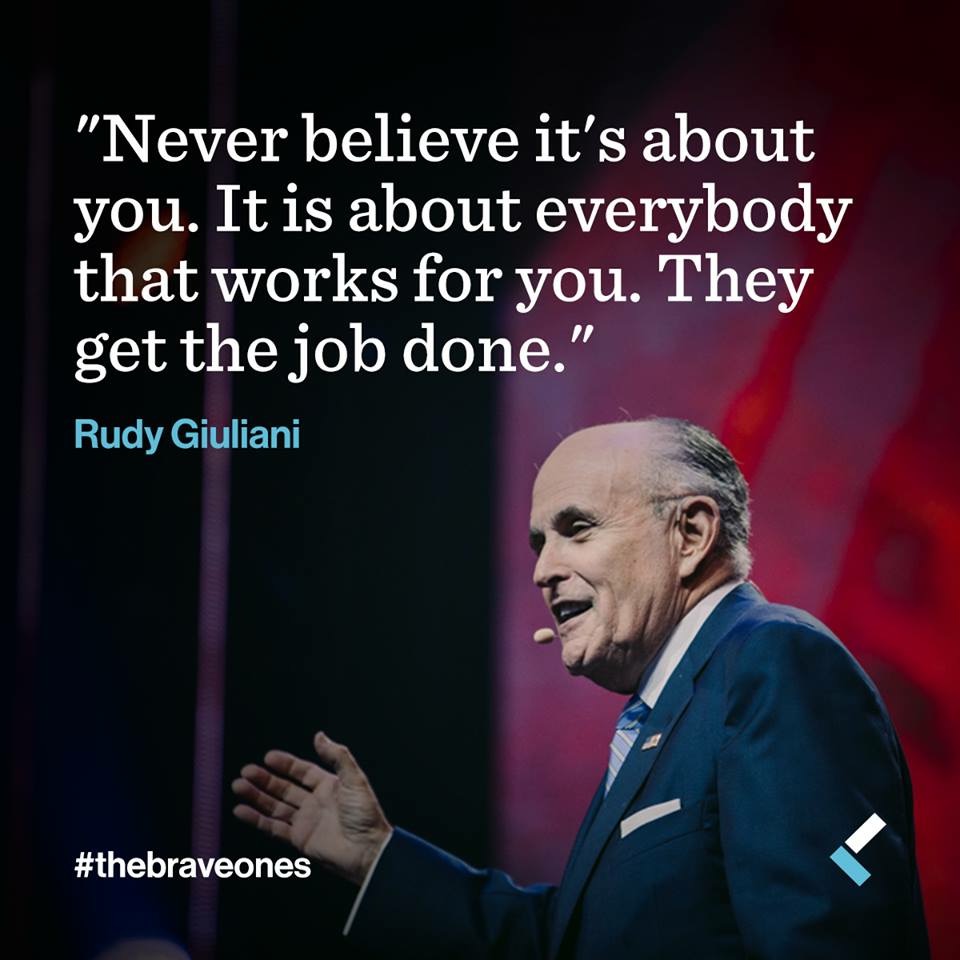
IMG_2682 The final speaker at Leadercast 2015 was Rudy Giuliani,  the former mayor of New York City. Although he has had  a remarkable career, he is probably best known for  supporting the people of New York following the  terrorist bombing attacks on the Twin Towers. Giuliani is a laid  back speaker who wanders across the stage as he retells  his story, weaving in his various leadership skills and attributes.

In reviewing my notes, I had highlighted a simple 5 word sentence which resonated with me, more than his explanation of his six leadership traits.

“You go to the scene”

Giuliani was obviously talking about his decision to immediately head down to Ground Zero, but I wonder if that phrase has similar implications for our role in educational leadership.

As school administrators, how often do we “go to the scene” when it comes to learning?  I know as a former school based administrator in a large complex elementary school, that when there was a 911 on the yard I immediately “went to the scene”.  Everything was dropped until the student(s) was safe. Do we have that same sense of urgency when it comes to ensuring that our students are learning? Is our presence any less necessary in the classroom, supporting our teachers as they teach?  And what is our role “at the scene”?

ElemClassroom3

As a system principal, how often do I leave the comfort of the board office and “go to the scene” in our schools?

For system leaders, who are responsible for educator learning, how often do we “go to the scene” and see first-hand if/how our work is landing on the student desk?

Giuliani’s presence on that fateful day was a pivotal point in making his leadership and his commitment to the people of New York visible. There was lots of important work to do in the following days and months. But I wonder if the people of New York were more prone to follow his lead because of his first step.

And likewise, there is certainly more to educational leadership than just showing up at the scene, but being there and seeing the learning first hand is a good starting point.

As a leader, do you automatically “go to the learning scene” or do you wait for the 911?


Come write with me…

Meaningful Milestones

Day 19

download The final chapter in “The 5 Most Important Questions”, written by Frances Hesselbein, is entitled Transformational Leadership.  In one short chapter, Hesselbein outlines eight milestones that organizations need to pass in order to reach their destination.


  • Scan the Environment ~ Do your homework! Know what the emerging trends, implications and data will be needed to support a responsive program. Two years ago, two of our Learning Coordinators, Jackie Sweeney and Aretta Blue piloted a reading project to support struggling readers.  That program has now grown into a significant initiative, aimed at supporting our OFIP schools, their educators, their parent community and most importantly their students. When the need arose to support those schools, we were ready!
  • Revisit the Mission ~ That will be our work in the next few days, before we can look at any future plans. We need to ensure that everyone is committed to our mission and what it means for our work in the system.
  • Ban the Hierarchy ~ I strongly believe in this notion and I am looking forward to what that means to our work.
  • Challenge the Gospel ~ What are the sacred cows that no longer fit into our work?
  • Employ the power of Language ~If leaders lead by voice, what are the powerful messages that connect and illuminate? When I refer to students in our system, I regularly call them “babies”, but I don’t think that I’ve ever shared why. I purposefully started using that terminology when I was disappointed and frustrated as a teacher spoke ill of a child and labeled them by their behaviour.  I never want us to forget that these children, whom we are blessed to work with, are indeed someone’s pride and joy. When a baby is born, his/her parents have every hope that they will be amazing and change the world. As educators we need to embrace that same hope for each student.cute_babies_hat_hd_free_download_wallpapers
  • Disperse Leadership Across the Organization ~ Do I empower the educators on our team? Do we, as system leaders empower classroom teachers?  If not, then how do we go about improving that?
  • Lead from the front, don’t push from the rear ~ Modeling desired behaviours at all levels of the organization is imperative. If we want our teachers to read and write, then we need to read and write. If want our administrators to make their reflections and learning  visible, then senior levels of the organization need to find ways to share what impacts them,  what motivates them and how they too are learning.
  • Assess Performance ~ As we have continued to embrace the Collaborative Inquiry process in our work, we have evolved to the point where reflection and assessment is ongoing. It is no longer what we do at the end?

What a list!  In rereading it, I’m not sure that there is a correct order in which to reach each milestone.  As you reflect on your staff (school based, system-level, task force members) have you already mastered some of them?  Which ones seem attainable?  Which ones seem too daunting? Which ones will have the greatest impact?

Come write with me….

More than just 5 Questions

Day 18

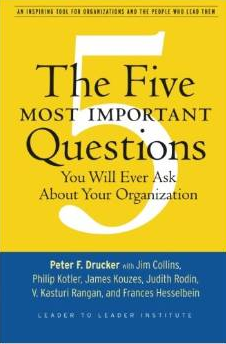
book_cover In anticipation of our upcoming Literacy Portfolio  planning sessions for the 2015-2016 school year, I took  the opportunity this afternoon to read Drucker’s “The  Five Most Important Questions You Will Ever Ask About  Your Organization”  I have come to appreciate the power  in authentic reflection and team discussion before  moving quickly to the planning phase.

Drucker et al discuss the following questions:

  • What is our Mission?
  • Who is our customer?
  • What does the customer value?
  • What are our results?
  • What is our plan?

A mission that “changes little over time and yet stimulates progress, change, improvement, innovation and renewal” and can still fit on a T-shirt, seems like a tall order. Within our portfolio we have created a logo ~ Literacy Matters.  I wonder if it passes the litmus test of a mission. Do those two words encompass our work?  That is where we will start our conversation.

image

Who are our primary customers and who are our supporting customers?  In education, we are all about improved student learning. Are students our primary customers or are the educators whom we work with our primary customers?  If our success depends on what we have contributed to the success of our customers, how do we measure our success?

We must know our customers, what influences them and how to create engaging experiences. Within our portfolio, how well do we know our customers?

Drucker et al state that “customers value a leader and a team who have the ability to listen and the courage to challenge the status quo”.  I wonder how we make that visible to our teachers.

Measuring our impact, using both qualitative and quantitative data, is not new to our team and something that we pride ourselves in doing. This year, we are looking intensely into the reflections from participants as a result of a photo elicitation activity.  I wonder how that data will inform our planning.

Now on to the planning phase:

Abandonment ~ what are we currently doing that we can let go?

Concentration ~ what can we strengthen  that we know is working well?

Innovation ~ what are the opportunities for something new?

Risk taking ~ what is worth taking a risk for?

Analysis ~ what do we still need to learn before abandoning, concentrating, innovating or risk taking?

What I appreciate about this book is that it not only provides the framework, but it also includes those thought-provoking questions which we will be exploring as we reflect on our next best learning moves.

When embarking on school improvement planning, do you use a similar framework?  What are some rich questions that you ask your team as you move through the planning process?images (1)


Come write with me…..
The Sweet Spot

Day 17
86522354 For those of you who play golf, tennis, squash, baseball  or any other sport involving a piece of equipment  connecting with a ball, then you know about the “sweet  spot”. It’s that magical spot on your racquet, bat or club  where, once you have impact, your shot reaches  maximum loft, accuracy and distance. You know exactly when it happens and how it feels.  For me, not only is it a beautiful shot, but it is pain free, too ~ which is an added bonus when playing a round of 18 holes.  There are a number of factors involved including point of contact, angle, stance, swing, grip etc. Not one factor is any more important than the others. All of them need to be in sync for maximum performance.

When I first started playing golf, if and when I hit the sweet spot (which was rarely), I was so pleased that I placed my club back in the bag and merrily went on to the next hole.  Now I find myself stopping and reflecting on which factors worked and which need more tweaking. I also seek out and appreciate feedback from my partners, as they have a unique perspective on my swing.

As with most sports analogies, there are many connections to our world of education. So, when you are learning, teaching, presenting or leading others, what does that “sweet spot” look like or feel like? Is it engagement, eye contact or active participation? What are the factors that need to be in sync in order for a lesson or a presentation to reach maximum performance?  Is it immediate or long term evidence of learning? And when we “hit one of the park” do we take the time to stop and reflect on what went right or are we too busy working on our next task? Do we ask others for meaningful feedback in order to help us improve? And if so, then how comfortable are we in making a commitment to act upon that feedback from our participants/students?  images

They say that the smell of success is sweet, but in this case, it’s the feeling of success that we’re working towards as we aim to hit the “sweet spot”

I would love to hear about teaching, learning, presenting, leading “sweet spot” moments.

Come write with me….

Lessons from Toy Story

Day 16

Leadercast ~ Ed Catmull.

Disney-Movies-600x401

We recently renovated our basement following a flood  last summer and as part of the process we embarked on  a major purge of items which we had moved from home  to home during the last 20 years. One of the boxes which  ended up in the Value Village pile was loaded with every Disney video produced between 1989 and 2006. Before DVDs, Netflix and Satellite TV, renting a video was a Saturday treat and the kids and I would cuddle on the couch with our popcorn and enjoy the latest release. Receiving videos as gifts became a ritual and Disney has been responsible for the most popular titles ~ everything from The Little Mermaid to Toy Story to Beauty and the Beast. So, having been a fan for over 20 years, I was thrilled that Ed Catmull, president of Pixar and Disney Animation, was one of the speakers at Leadercast 2015.

Like most of us, I’m intrigued by the story behind the story and Ed took us on a journey of the success of Pixar and Disney, but he also shared some of the failures and most importantly the lessons learned from the failures.

As a school board, we are exploring innovation and creativity and looking for ways to harness both in order to engage and empower our staff and our students.  So Pixar’s Guiding Principles certainly provide some food for thought and some parallels between a vast community that creates Blockbuster animated movies and a school system looking to create a community of innovative thinkers and lifelong learners.

Pixar’s Guiding Principles

  1. Everyone must have the freedom to communicate with anyone.

I can clearly recall my first week within my current role and with great exuberance, following a discussion with our Director, I had emailed the assistants of each superintendent to get a copy of school improvement plans in order to connect it with our work.   The “send” button was still warm, when I was invited into my supervisor’s office and gently reminded that such requests needed to go through her and that I was not to contact Superintendents directly.  I continue to struggle with the notion of “lines of communication” as I feel that it inhibits the true essence of the message being shared.  If it is my idea, then doesn’t it make sense that I’m the one sharing it and responding to questions or concern?

Although I’m quick to recall when my freedom has been inhibited, I need to ensure that members of my team don’t feel that I inhibit their freedom to communicate with others in our organization.

  1. It must be safe for everyone to offer ideas.

Catmull talked about removing the power structure from the room. I wonder how many leaders are capable of such “leveling of the status” field. Far too often I’ve been in meetings where the most senior and seasoned voice is the one that carries the clout and ultimately the final decision.

Once again, my own take-away is one of reflection on the meetings within our various teams within the Language portfolio and the Instructional coaching team.  Do all of the members of our teams feel safe to share their innovative ideas?

  1. We must stay close to innovations happening in the academic community.

Likewise for those of us in education, we need to stay current in our field and we need to publish and share what we are doing. Are we making a cognizant effort to make our thinking and learning visible?  Am I doing all that I can to ensure that our teams are staying close to the innovations emerging in supporting teacher professional learning?

Tag-Your-Friends-as-Toy-Story-3-Characters

As I prepare this post, various scenes from some of my  favourite Disney/Pixar movies are scrolling through my  head. I recall when the toys in Toy Story needed to take  on a task or escape some impending doom ~ each  member contributed something useful, whether it was  Mr. Potato Head’s eyeball to see under a doorway, Barbie’s flirtatious moves to distract Ken or Rex’s large tail used to tackle the enemy. I can’t help but wonder if the inclusive community created at Disney/Pixar is being represented within their films. Everyone is a valued member and the task at hand can not be completed without everyone’s strength’s being utilized.

These guiding principles are not only intended for the corporate level. When you reflect on your role as a teacher, do you embed those principles in your classroom environment?

Come write with me….


Where Everybody Knows Your Name

Day 15

images

Saturday I had one of those “Cheers”  moments when I walked into a nail salon  and two of the girls yelled, “Hi Sue!” I was  taken off guard in that I’ve only been there  about 4 times and to be honest I’m not one  of those memorable customers. I am  pleasant, but when it comes to my world outside of education, I’m rather quiet and reserved.   Once I got over the shock of them knowing my name, I felt welcomed and immediately embarked on a conversation.  There is such power in knowing someone’s name.

Earlier this week, as I was assisting a colleague with interviews, one of the candidates came in and knew my name.  I continue to feel self-conscious when that happens and yet being in a system role, I am reminded that it is natural for educators to recognize me from a presentation or an event.  I try to learn as many names as possible as there is power in knowing someone’s name.

Yesterday I was reminded of the very same concept, when during our Innovation Forum; one of the short term goals to address communication concerns was to have all Board Office staff wear a name tag. We discussed the importance of being able to call somebody by their name as we pass them in the hall or connect a face that is all too often only associated with an email address.  Once again, there is power in knowing someone’s name.

As educators do we truly appreciate the power in knowing the names of the students beyond those in our classroom?  Especially those quiet ones?

My challenge for educators is to get to know the names of 5 students in your school who are not in your classroom.  If you work in a large busy environment, such as our board office, the challenge is the same ~ get to know the names of 5 new people.

100847-98260

I wonder what the challenges will be.   I  wonder what those “Cheers” moments will mean to others.

Come write with me….

Work Better…..Together

Day 14

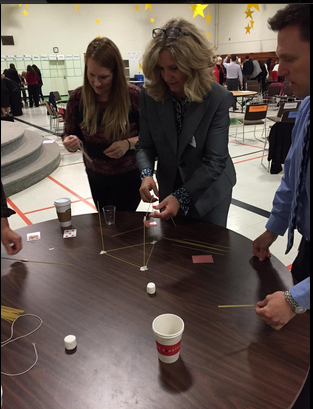
On Wednesday, I had the opportunity to take part in our Innovation Forum ~ an open spaces/EdCamp style session where participants came together to discuss ways in which we can Work Better….. Together.  This was my third experience with this format, but with different groups of participants. In February, the Innovation team took our Vice Principals and Principals through a similar event. Today’s participants were representative of every department within the Board office. We had Superintendents, Managers, Coordinators, Supervisors, Psych Associates, Administrative assistants,  Financial officers, Technology analysts ( to name but a few)  begin the morning with “The Marshmallow Challenge” and end the morning with an incredible list of innovative ways for us to “Work Better…..Together”.

innovation

I can undoubtedly share that yesterday’s  session was by far the most positive of  the three that I had attended.  Maybe it  was the opening activity, which we did  not do for the administrators or maybe it  was attributed to the fact that team continues to refine their facilitation skills.

But, as soon as the participants were asked to generate ideas, there immediately was a line up and the markers were flying; unlike the other two sessions where participants were extremely reluctant to share.

Once the sessions started, the discussions flowed naturally and respectfully. At no point was position or ego even a consideration.  Short term and long term suggestions were documented and before we knew it we were on to session two. Kudos to the participants!

Upon reflection, I have to wonder why the other two sessions, with our administrators, did not generate the same level of excitement, passion or results.

12833073-innovation-ball

Was this session successful because of the mix of the participants?  When looking for ways to find innovative solutions to embrace change at a system level, how important is the grouping of the participants?

What are the challenges to having open, honest, solution-oriented discussions with our administrators?

Come write with me…