BOOM…. History, the way it was meant to be taught!

PridePrejudice423x630         Day 3

In University, I majored in English. I loved the      Victorian Era, with Pride and Prejudice being  one of my favourites. Every time I watch, “You’ve Got Mail”, I begin to laugh as Tom Hanks’  character tries to impress Meg Ryan by making it through the first couple of chapters and then he challenges her with a reference to Mr. Darcy near the end of the movie.  My minor, however  was in History. I’m not sure why and my marks certainly reflected my lack of appreciation or  understanding of the importance in knowing World History.  To this day, I cannot match dates  to important world events. I always feel less than intelligent when conversation at social events turns to historical perspectives and as you can probably guess, when given the choice in Trivial Pursuit, I avoid the yellow pie piece every chance I get.

So, it was with some reservations that I attended the One Man Show ~ BOOM at the Grand Theatre last week, knowing that it was going to be a historical journey from 1945 – 1970.

But within minutes, I was drawn into the production and the historical importance of these events!  Rick Miller masterfully took three seemingly unrelated story lines and through music, powerful visuals and breath taking technological effects wove them into the most amazing history lesson.  old-magnifying-glass-word-history-13199603

It was once again a reminder about the power of story and personal connection to that story.  Miller took monumental events, such as the assassination of JFK, the Berlin Wall, the space race and Apartheid and he shared how they affected the lives of the characters in his story.

I wonder if History lessons in University had been taught that way, if I would have been more engaged?

Do you use the power of story to engage your students?

whats-your-story

Come write with me…..


Stop Pretending…..#MakeSchoolDifferent

Day 2

Thanks to Doug Peterson for the tag in his Stop Pretending…..#MakeSchoolDifferent post.  I’ve enjoyed the posts from others on the same topic. They are bloggers whom I respect and whose writing continues to challenge my thinking, so I’m honoured to include my list among theirs.

In order for us to make a difference, we have to stop pretending:

1) That the most innovative ideas are generated by those in the most influential positions.
This past summer I read Dan Pontefract’s Flat Army and it resonated with me on so many levels.  I wonder if sometimes we turn to Superintendents and Directors with the assumption that they will have the most innovative answers to a challenge, based on their years of experience and broader to connections to education?  When in reality, it may be those ECEs, Educational Assistants, Teachers and Administrators who are working in the “trenches” with the best view and therefore the best insight into innovative ways of making a difference.

2) That all administrators intuitively know how to be instructional leaders.
These days there is an expectation that our school administrators have a well defined skill set in the area of Instructional Leadership. There are many administrators who indeed know how to inspire, motivate and lead a school community on a learning journey.  But, we also have to admit that some of our colleagues are great relationship builders and financial managers, but they do not have that skill set and what are we, as a learning organization, prepared to do to support them?

3) That the answer is always in the room.
We love to throw that line out all the time and I believe that we can certainly learn a great deal from each other. But I’m wondering if at times, we need to ensure that we are bringing “others” into the conversation and looking to the research to support us?  If we want to make a difference, we need to be able to look for answers everywhere possible.

4) That saying “I’m a life long learner” is enough
We’ve all heard it and maybe even said it out loud ourselves, but do we make it visible?  How do we share that we are life long learners?  Do we really embrace learning something new, which means that we will never do things the same way again?  How different would life look in our schools, if everyone was a learner? Talk about making a difference!

5) That it’s acceptable to avoid integrating technology into our lives as educational leaders.
In order to make a difference, every level of the organization should be embracing, modeling and inspiring others to see the implementation of technology as a mandatory component of how we do business.  Our students deserve committed educators who are willing to learn!


To keep the meme going, I tag @jen_aston @DavidFifeVP @marshakelly @pluggedportable @annettcann

One a Day

191vgo8sulvv5jpg For the next 31 days, I’ve set out on a personal challenge to write and publish “one post a  day for the month of May”. I have been inspired by @Dunlop_Sue who set and met her  goal to publish one post a day during the month of April. Sue is a Superintendent for the  Hamilton Wentworth School Board. I continue to be impressed with her dedication to  making her learning visible via her blog and her Twitter feed.  I figure if a busy  Superintendent can make a commitment to a daily post, then certainly I can do the same.

As I reflect on my current posting pattern, it is one where I try and publish at least 1 post per month and at times I’ve managed up to three posts, so this new goal will be a significant change for me.   I wonder if knowing that each day I will need to find something to write about, I will become more aware of those “notable” moments. I find that topics come easily as I surround myself with people who challenge my thinking. I wonder how my daily interactions will change?  I also wonder how and IF my writing will improve, change,evolve?   Writing is a skill and just like any other skill, the more you practice, the more you improve. And my final wondering is by increasing my output of posts, will I inspire others to make their thinking visible and take up the challenge of blogging?

images


Dancing Queen

download As I write this post I’m getting excited about my plans for tomorrow night. I’m heading off to  the London Convention Center with a group of female family members to enjoy Jeans’ Classics ~ A Night of ABBA.  Knowing who I’ll be attending with, there will definitely be lots of singing  along and dancing in the aisles. Song and dance are an important part of my life. I can’t imagine  starting my day without the radio on, playing music as I make my way through my morning  routine; sometimes, dancing as I apply make-up or fine tune my locks.

This morning was no different and in fact the topic of Dance was part of my first meeting.   I always look forward to my meetings with our ETFO Vice President, a talented teacher whom I’ve had the pleasure of working alongside of in a school setting as well as our current working relationship. Today’s topic was the Provincial Report Card and more specifically expectations around the Arts comments.   As many of you know, we have four subjects within the Arts section of the report card ~ Dance, Drama, Music and Visual Arts.   We are striving to provide consistent messaging to our teachers about the most effective way to report on their assessment of these subjects, throughout the entire school year.  I’m confident that with continued discussions, we will be able to reach a shared understanding and consensus.  Our discussion encompassed a variety of hypothetical situations about the challenges of teaching dance, teacher knowledge on the subject etc.  We ended the meeting, with a shared desire to come back to the larger group next week and work through more negotiations.images

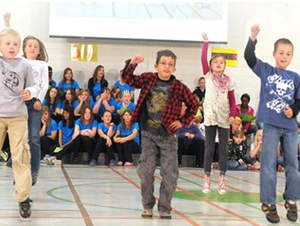
My day then continued on until about 1 pm when our ESL Coordinator came to my office and invited me to join her in the Thames Room (our large gymnasium at the Ed Center).  Today was the final afternoon for the Dance Festival and students from our LEARN (congregated ESL classroom) were performing.  At that moment, everything on my “to do list” became secondary and I headed downstairs.  The place was rockin’ with students from Early Years classes right up to Secondary School students.   Our board certainly knows how to put on a show and today was another fine example.  The performances were projected on the big screen and the bleachers were filled with proud parents, grandparents, teachers, administrators etc.  I was thoroughly enjoying the music and in awe of the performers, but it wasn’t until our group of students (most of them from Nepal) in their traditional dress took their places in the center of the gym that it hit me (tears and all). For many of those students, less than a year ago, they were in refugee camps and experiencing horrors that we would never wish on any child.  This group of children have had their challenges in entering our school system, understanding a new culture and making new friends.  We are blessed to have dedicated teachers, Natalee Wales and Peggy Dunham supporting them every step of the way. And yet here they were today, dancing, smiling and singing a song honouring their homeland and sharing a piece of their culture with a broader audience.

All of a sudden the hypothetical conversations from my morning meeting became a reality.  I wish I could have bottled the emotion from today and shared it with those few educators who find is challenging to see the benefits of teaching and assessing all of the Arts for our students. Our job as educators is to ensure that we are providing our students with every possible opportunity to shine.

For those of you who know me, you can probably guess that my favourite word popped into my head as I made my way back to the “busyness” of my office ~ Serendipity.   Was it fate that both my meeting and the dance festival were on the same day?  It certainly wasn’t a purposeful plan on my part. If it had been, I may have escorted my visitor down to the Thames room so that he could have experienced it for himself.

4-24-2015 5-37-25 PM

Whatever it was, I was thankful for the bookends of “Dance” in my day!

A Musical Memory

signWhile on a recent trip, I had the pleasure of going to the Alabama Theatre in South Carolina to see the show entitled, ONE. For any of my readers who know me well, you know that I have been a huge fan of the country group Alabama for most of my adult life. Many of my most memorable moments are connected in some way to an Alabama song. My first “real” concert was in Buffalo, 30 years ago to see them, when they first started touring. So, as I walked into “their” theatre, I was smiling ear to ear, like a child walking into a candy store.  I am also a huge fan of live entertainment and that evening I couldn’t have hoped for a better mix of singing, dancing, acrobatics and comedy. The playlist of music encompassed selec2015-04-09_2255tions from country, to pop to gospel and everything in between. The musicians masterfully played instruments ranging from the banjo to bagpipes and the routines included a flying Mary Poppins and a talking dog.  The audience was mainly comprised of tourists, but I had the pleasure of sitting beside a gentleman (Gene) who attends the show 3 times a week. Our conversation evolved from pleasantries to insider information on the performers (brothers and sisters, married couples and newlyweds) to the reason behind his regular attendance.  Throughout the show, his wife sat quietly by his side, smiling and only speaking once as she asked to get up and stretch at the intermission.  Gene shared that his wife has experienced several medical setbacks in recent years and a significant part of her memory is quickly fading.  Some weeks she remembers attending the show and other times, it is all new and exciting for her.  He spoke of their shared love of music and as the music is playing, it is one of the rare times that he feels still connected to her.

Gene’s story is a beautiful love story as it speaks to the power of a musical connection, a shared experience that, in this case, can transcend the bounds illness and memory loss.

music

As I think of my own journey, I know that hearing a song can instantly transport me to a time and place with special memories.

If music has that power, are we as educators embracing it as much as we should?

Come write with me….

Capturing the Best….

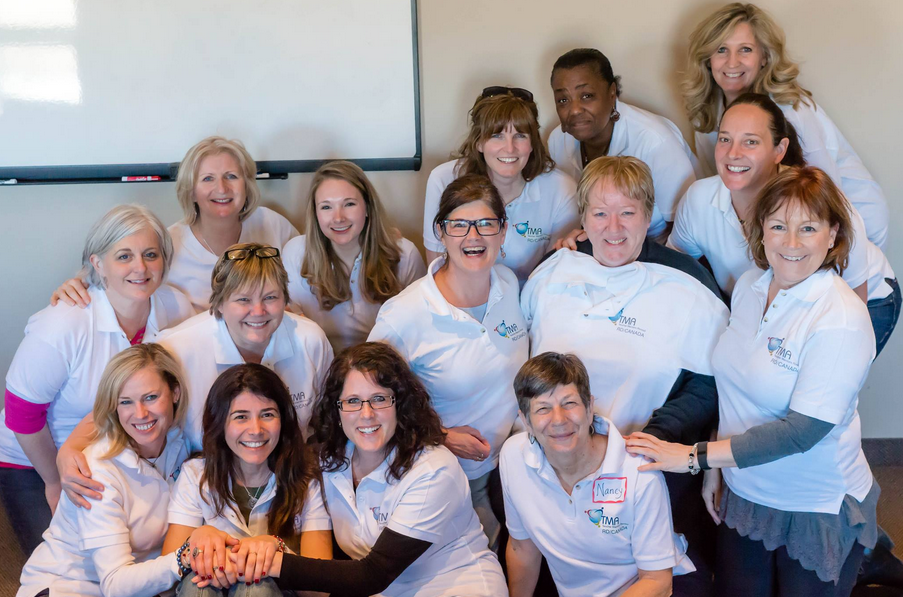
Last weekend, I drove to Uxbridge to join the rest of the TMA (Teachers Mentoring Abroad) team as we planned for our excursion to the Dominican Republic in July.  This organization is celebrating its 10 year of supporting educator professional development in the Dominican Republic and I’m thrilled to be sharing strategies to support reading comprehension as my contribution to this year’s conference.  One of the newest members is Anita Watkins, who joins us as the team photographer. She captured a great team photo as well as a few shots of us working through our plans.  During lunch, Anita shared her passion for photography and the journey that she has been on as she has started to develop her business. As someone who is learning how to use my new camera to take effective pictures, I was listening intently for pointers about how to improve my new found photography skills.

TMAAnita is also an educator and I was impressed with her comparisons between photography and education.   She coined a phrase that is so powerful.  She shared that photography is like teaching, in that in both cases the photographer and educator are always trying to bring the best out in the subject/student.

Anita’s specialty is head shots and her work is impressive.  Your eye is drawn to the eyes and the smile of each subject.  Most of us are so self-conscious of what the camera captures.  We see flaws and imperfections, which are augmented in our eyes. But the right photographer, who knows the rules of lighting, the best angles and the positioning of the subject captures a masterpiece.  Anita provided us with direction as to when to smile, when to look at the camera and how to “turtle” to diminish signs of “maturity”.

It is in the same vein that the right educator, who knows his/her student, who knows what engages them and how to provide feedback for improvement will undoubted bring out the best in the student.  If we look at student improvement through the proper lens and ensure that we are focusing on what is important, we will caimagespture the best in our students.

Just as a photographer is needed to capture precious moments, a masterful teacher is needed to capture memorable learning experiences.  When was the last time you, as an educator, felt like an artist?

Come write with me….

A Rock in a River

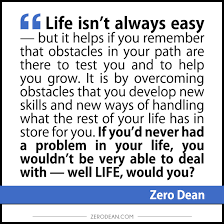
Life isn't always easy

|| click image to enlarge ||


Wouldn’t it be wonderful if every idea we had was immediately embraced by others, every word was explicitly understood and interpreted correctly and every plan of action was seamlessly implemented without hesitation or challenges? I don’t know about your world, but this rarely, if ever, happens within my world.  At times it seems as if obstacles are strategically placed to impede our progress.  A colleague needs clarification before agreeing to participate in an initiative, plans need to be reworded or reworked before receiving final approval or timelines need adjusting for a variety of reasons.

I will admit that occasionally I’ve looked upon those obstacles as “signs” that things were not meant to be or that my time and energy needed to be elsewhere, only to dig a bit deeper and ultimately develop a deeper appreciation for those obstacles as each one of them was an opportunity for growth and learning.

It has been through those additional conversations, where I have had to articulate an idea more thoroughly or provide more explicit explanations that I’ve developed a deeper understanding or a different perspective on my original idea.

It has been through those “road blocks” and timeline adjustments that I’ve been able to develop more creative ways of working through the process and more unique ways of meeting the end goal.

If it weren’t for those obstacles, my thinking would not have been pushed. I would have able to coast on autopilot and cruise to a known solution, which would not have been nearly as creative or unique.

Rocks placed in a running river don’t stop the water, they cause it to run faster and create additional movement.

imagesWhen obstacles are placed in our way, we don’t stop, we become resourceful and innovative and end up with a better product and ultimately embed ourselves in a powerful learning journey.

What obstacles have you overcome and what did you learn about yourself in the process?


Come write with me….

50 Shades of White

In writer’s workshop 101 you learn to capture the reader’s attention with a catchy title.  Did it work? DSC02414

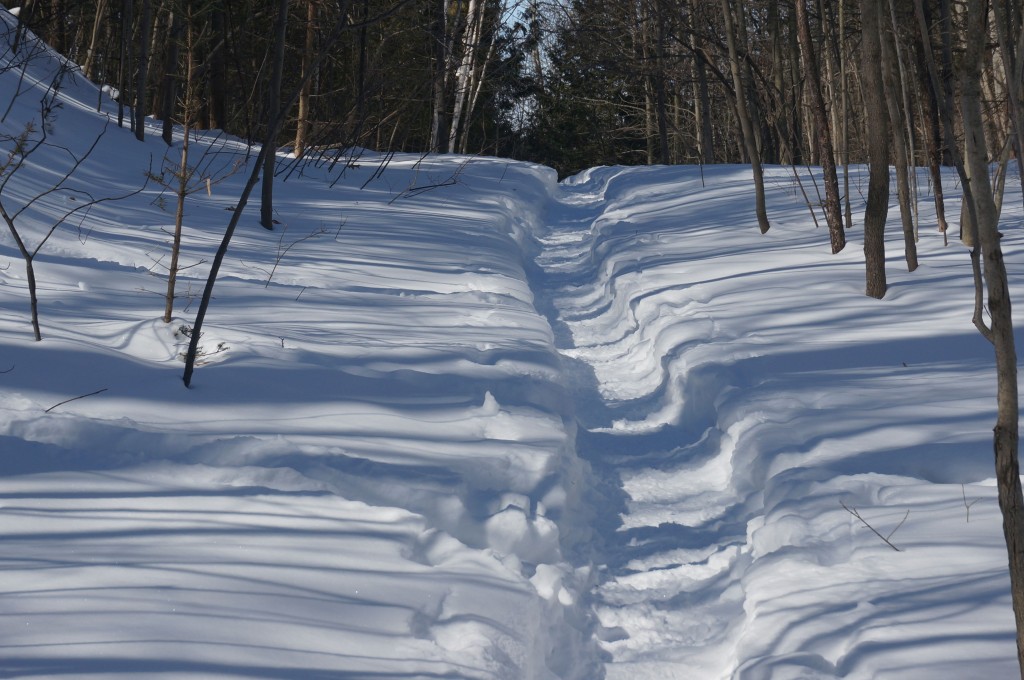
This past weekend we were treated to a day of gorgeous sunshine and temperatures which climbed to single digit minus degrees.  It was a wonderful reprieve from the polar vortex that has been enveloping southwestern Ontario for the last month.   I decided to take advantage of the “warmth” and headed to the Komoka trails, complete with camera around my neck, with the intent of capturing some pictures of birds for a project that I’m working on.  These trails are ones that I’ve enjoyed in the summer, spring and fall as they burst with different colours depending on the season and meander along the Thames River which also changes with the seasons.


DSC02384Within minutes I was struck with the beauty of the trails in winter and I noticed things that I have never noticed before during my numerous hikes.  I began to wonder if sometimes the sensory overload of colour takes us away from an underlying beauty.   Without the leaves, the trees lining the pathway formed a perfect archway and their shadows created a symmetrical pattern in the snow.  Shades of white became part of a beautiful mosaic of nature’s beauty. The intersection of branches and twigs created statues which, if you let your imagination flow, resembled great works of art.

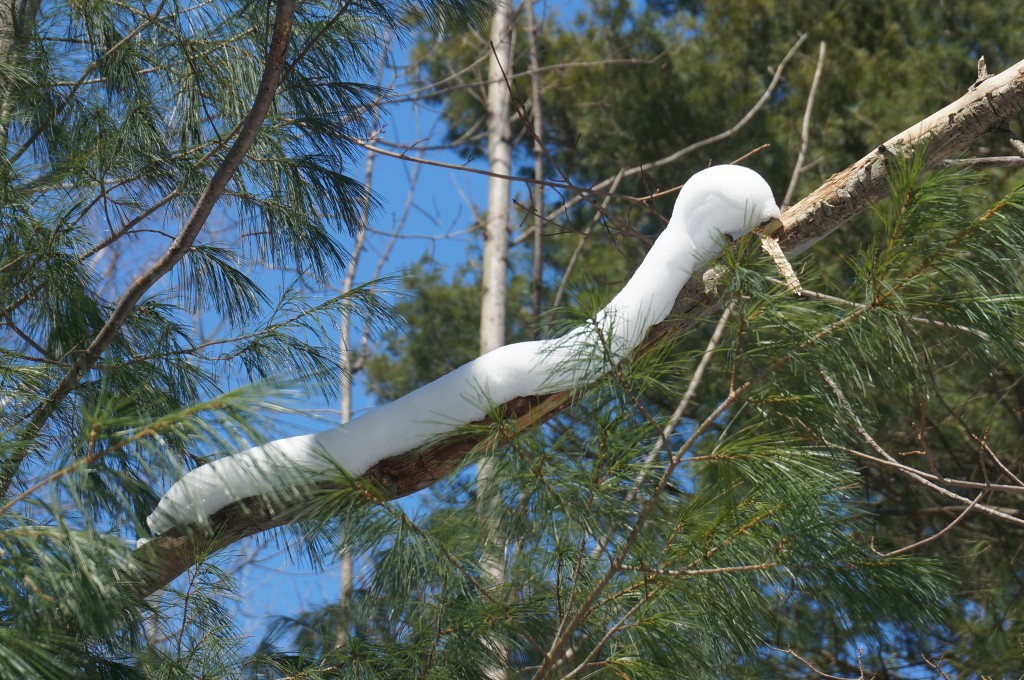
As I continued my hike, I captured the intensity of the sun on the snow.  Within trees, what once were blankets of snow were beginning to melt and create artistic representations.  Some of them resembled large white caterpillars slithering along branches, complete with shape, depth and design ~ yet all in white!   We can only hope that within a few months colourful, real caterpillars will be doing just that.DSC02410


Persistence is a common theme in many of our schools these days.  We share novels, picture books, videos and picture quotes to give our students a sense of what persistence means.  With a winter as severe as the one we’re in the middle of, I was astonished to see a few trees who were still clinging to leaves which refused to drop, in spite of the wind, snow and frigid temperatures ~ nature’s reminder that with the strength of resolve, we can weather any storm.

DSC02403

Like most of us, I am looking forward to the warmer temperatures of the spring and the colourful reminder of rebirth and renewal.  But today’s hike reminded me that beauty and depth of colour and a visual experience can occur within shades of white.


Reporting from the heart!

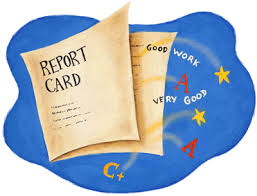
images (1)To this day, in the nightstand table in my parent’s bedroom, I can still find them. They are in chronological order, held together with a large elastic band ~ every report card of mine from Kindergarten to Grade 13.  I’m assuming that my brother’s pile is not as thick as there may be one or two of his secondary school ones missing in action.  The joys of snail mail in the 1980’s and the ability for certain documents to get lost in the mail.

In looking back through the stack, the format has certainly changed. Years ago my parents were provided with a handwritten tiny booklet with a few grades and one or two sentences. Today we provide parents with neatly typed four pages of grades/marks, expectations, strengths and next steps towards improvement. 

But regardless of the format one thing has not changed over the years and that is a parent’s pride in reading their child’s report card. All parents are reading report cards for the same thing. They want to know that the teacher cares about their child and that the teacher knows their child as a person and as a learner.  They want to read what their child is capable of doing and how the teacher is prepared to help their child improve.

Over the past 10 years, I’ve had the pleasure of reading many well-crafted, meaningful and informative report cards.  My feedback to staff has always been the same,  “Remember you are writing the report for a child’s parent to read.”   These children  are the apple of their parent’s eye and the keeper of their hopes and dreams for the future. Parents don’t want to read a grocery list of what their child cannot do. As parents they know their children very well.  A teacher’s job is to give purposeful, productive feedback that provides parents with hope that the next report card will be even better, as the teacher is going to do all that he/she can to continue their child’s learning journey and accompany them on that journey.

Last week I was at the hair salon and my stylist was sharing the news of her daughter’s very first report card.  She could quote verbatim what her daughter’s teacher had said about her ability to interact with others,  how well she shared materials and how much she seemed to enjoy school.  My stylist was not as concerned about what her daughter could or couldn’t do, but she was thrilled that her daughter’s teacher cared and knew her.  We always need to remember that during the weekdays teachers get to spend more waking hours with children than their parents do.  So, parents need to know that their children are cared about.

That same evening, I found this comment on Facebook

“Best report card line ever….”…has clearly learned that mistakes support brain growth and she does not appear to be worried to make them”. Well written Ms. Elliott…I may have to steal it!

I appreciated this comment because it not only showcased that Ms. Elliott knows her students, but that other educators admire good comments when they read them through the eyes of a parent.

Report card writing is demanding, especially when it is done effectively. We never underestimate how challenging it is to capture and document student learning. Especially when students are continually on their learning journey.  images (2)
For those educators who know their audience and the power of generating a thoughtful, articulate, inspiring report card, THANK You!

One day, your students may stumble upon a well preserved stack of report cards and read them, knowing all too well how much you cared and how much your words inspired them to continue to learn each and every day.

When you reflect on the report cards you received as a student, what do you remember the most?

Come write with me…..

We are Marshall

One again, I found myself watching a “sports-inspired” movie and ending up finding inspiration for the world of education.

download

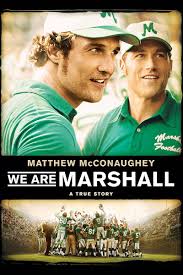
We are Marshall depicts the story of the 1970 plane crash which claimed 75 lives, including the majority  of the Marshall University football team, their coaching staff and boosters.  Following the crash, a new coach, Jack Lengyel, portrayed by Matthew McCongaughey rebuilds not only the team but the small town of Huntington.

Rebuilding a team from scratch was no small feat.  The first obstacle was to petition the NCAA to allow freshmen to play. When phone calls and letters were not working, Coach Lengyel asked the College president two poignant questions. “Did you propose to your wife over the phone?” and “Did she answer you in a letter?”

I started to reflect on the pros and cons of electronic communication. Within our world of education, emails fly back and forth throughout the day, our fingers fly over our smartphones as we send text messages and we have crafted our tweets down to 140 characters in order to send our messages out to the world.

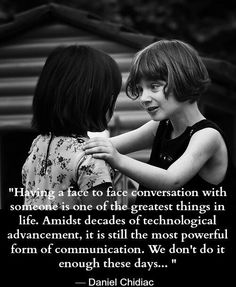
At times we all need the reminder that the most important communication needs to happen face to face. Efficient does not always equate to Effective.

face to faceThe second obstacle involved learning and perfecting a new play that the Marshall team of freshman players could execute with precision.  On the theory that “it doesn’t hurt to ask”, the coaching team asked the West Virginia team coach, Bobby Bowden, if they could study their “V” play, knowing that the teams would not compete against each other this season. In the competitive world of college football, it would have been common practice to deny such a request.  But that didn’t happen.  The Marshall team was allowed to study the play until they had had it perfected.  By sharing their knowledge, the Virginia team not only positioned themselves as a class act, but they helped to strengthen the league.

In education, we all become better and more effective when we share our best practices, best assessment strategies, best resources and latest evolution of an idea. All too often we still become territorial about the work that we are doing in our classrooms. Collaborative networking creates the conditions for us to share and learn together. We just need to embrace networks (both formal and informal) and look upon them as a natural way to “do business”

That level of sharing needs to be replicated from school to school, from department to department and ultimately from school board to school board, if as a province we want to see improvement on a large scale.

share

We are Marshall reinforced a couple of key components for educational improvement ~ Know when to have that face to face conversation and intentionally share.

What is another sports-inspired movie that inspires the educator in you?

Come write with me…….