Reflections from EdCamp Leadership 2014

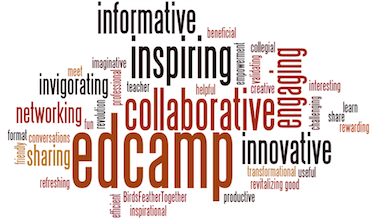
wordleedlpThis past weekend, I had the opportunity to travel to Philadelphia PA to attend Edcamp Leadership.  It was a gathering of educators from 10 different states as well as a handful of Ontario educators.  Last year, I attended a similar conference in New Jersey and was excited to interact, once again, with many of the educators whom I follow on Twitter.  This was my fifth EdCamp experience and it proved, once again, to be an opportunity to “listen, learn and share” with like-minded leaders.  As I review my notes, there are several key themes that resonated with me and a few more which caused great, deep and sometimes heated conversation on our 11 hour drive home.

One common thread within each session was the question as to how to connect others to social media.  Tom Whitby succinctly shared that “the worst advocate for being a connected educator is a connected educator”.   If that is true then how will we get our colleagues to see the benefit of using social media to engage their staff, their students and their parent communities?  images (2)
We’ve experienced the same challenges when it comes to sound pedagogy in the area of inquiry based learning, problem solving or comprehensive literacy instruction.  Those who are doing it, can’t imagine a world without it and can’t imagine why others aren’t submerging themselves in this vast array of professional learning and resources.

Another phrase which was shared by Jay Eitner (New Jersery superintendent) was “that being connected flattens hierarchy”.  I have come to find that to be one of the most meaningful advantages of social media.  Within 140 characters, one can easily read the thoughts, views and opinions of others from all walks of education as well as reach out and seek information, resources or clarification.  I’m continually amazed when authors like Todd Whittaker and Dave Burgess reply to a Tweet as if they were the teacher next door. I love that!  Within many organizations, you see the interaction between directors, superintendents and first year teachers ~ all very seamless.  The common goal of professional learning transcends any hierarchy of position, paycheck or personal agenda.

For me Edcamp is a fine blend of new resources (can’t wait to try out Smore, Teachercast and Cel.ly) and thought provoking discussions.   At Edcamp Leadership there was a distinct camaraderie between many of the Edcamp Leadership organizing team and some of their inside jokes were lost on us “out of towners”,  but at the end of the day, using social media and various technology tools to have an impact on the learning of others (leaders, teachers, students and parents) was at the heart of each conversation.

It was a privilege to spend a day in Philly with connected, concerned and caring educators.

Have you ever attended an EdCcamp?  If so, what resonated with you?

images (4)Come write with me….

What’s on your plate?

downloadFor those of you who have found your way to my blog in the past, you know that I am “domestically challenged”.  So it would probably surprise you that I found myself watching,  Restaurant Impossible,  a show where Robert Irvine is called into rescue restaurants that are in financial disarray. He updates the menu, renovates the physical layout of the establishment and provides financial advice to the owners.  Although the technical terms of the meal preparation seemed like a foreign language, the leadership advice that he provided the owner was music to my ears.

As this particular story unfolded, it became more and more obvious that as a result of a past employee’s indiscretion the owner had come to distrust her employees and subsequently was taking responsibility for every aspect of the restaurant.    In taking on so much responsibility, other areas of the owner’s life were falling apart.

At one point in the show, Robert Irvine, presented the owner with a series of chain necklaces, each one representing a task that she completes (ordering, scheduling, opening the restaurant, closing the restaurant etc.).   As each necklace was added, there was a visible change in the owner’s stature.

images


The next step involved a discussion about each task, followed by the question, “Who can you trust with this task?”   By the end of the session, there were several piles, each one assigned to a member of the restaurant team.  A few of the chain necklaces remained on the owner’s neck as she shared that she felt confident that those tasks needed to be completed by her.

The connections to school leadership were so obvious.  Most school leaders feel the need to control too much.  When in reality, it is so much effective to trust your team, which ideally includes your teachers, your support staff, your parent community, your student leaders, your system leaders and your Superintendent.  Trust your team members with important tasks.  Not only will it ease what is on your plate, it will demonstrate your trust in others.

download (1)

As you look towards the upcoming school year, what is on your plate?  What can you share with others?


Come write with me….

Why Write? Is Anyone Reading It?

download (4)I recently celebrated my fourth year as a blogger and every once in a while I find myself taking a stroll down memory lane and re~reading some of my former posts. For some of them, the memory of the “spark” of inspiration is as clear today as it was on the day I was compelled to capture my thoughts and document them.
For some of my posts, I have to resist the urge to hit the “trash” button and delete them, as I am embarrassed by my simple, dis~jointed writing.
And for some of them, I read them and feel a sense of pride in the fact that I was able to articulate a thought, a feeling or a topic of interest and weave it into a well crafted post.

I recall the first time I received a comment on one of my blogs ~ it was a summer time post about sitting on the dock and listening to the sounds of nature and the importance of memorable sounds in one’s learning environment. The next day, the author of the comment introduced herself to me at a conference and shared that my writing had inspired her to start a blog of her own.

Over the past few years, I’ve been involved in a number of professional learning experiences about the power of blogging for students (as an authentic form of writing) and educators (as a platform for making their learning/leadership visible).
More recently, the world of Twitter and Facebook have become effective forms of social media for sharing my blog and increasing readership.
Yet I still have many days when I wonder if anyone, other than my daughter and best friend are reading the latest post on Leadership, Learning and Life.
But this past week, I had two experiences which have inspired me to continue to peck away at my keyboard and document those “sparks” of inspiration.

The first one involves a respected colleague who is doing an incredible job of motivating his staff to embrace the power of collaborative inquiry as a means of promoting engaging tasks and higher order thinking questions. I was invited to come and listen to him share the journey that he and his staff have been on during this past year. They have delved deeply into a model whereby they are exploring new and exciting teaching practices and finding great results in terms of more student voice and student engagement. He beamed with passion and pride as he talked about the commitment on the part of his staff to reflect on their practice. As he was explaining the professional learning opportunities that he afforded his staff, he shared that he had used one of my blog posts “Curiosity and Collaborative Inquiry” as an article for discussion.  I was truly honoured!

Then the very next day, I received an email from a former student, who has just finished teacher’s college. She shared that one of my colleagues had recommended that she read some of my blog posts. Within her email, my former student shared that she was motivated and inspired by what she read and she hoped that one day she would become one of the effective teachers that I highlight within my posts. Twice in one week, I was very humbled!

For those of you who have delved into the world of blogging,images I too, know the feeling of writing for a very limited audience. But this past week I was reminded that one never knows where one’s words, thoughts, stories, ramblings will land and what effect they may have on others.


Keep pecking away at the keyboard….

Come write with me…..

Curiosity and Collaborative Inquiry

Children are born curious.  I love watching children take a pile of blocks and see how high of a tower they can construct.  The tower falls down and they try to rebuild it with a different formation or using different shapes.  They continue the process until they are satisfied that they have created the best possible tower with the best choice of materials.download (9)

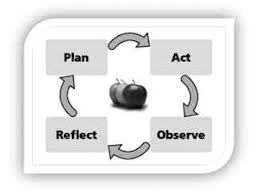
Inquiry-based learning has its foundation in a child’s curiosity.  It starts with a question, followed by an action plan and a reflection on the success of the process.  The child wonders how high of a tower they can build, they make several attempts and determine how to stack the blocks in just the right order to obtain the desired tower.

Teacher collaborative inquiry is also based on curiosity. A teacher has a question about a mystery student or group of students.  A student, who regardless of the strategies the teacher employs, is still not able to master a concept or demonstrate the desired outcome.  The teacher develops an inquiry question based on a change in practice and then sets out to build their knowledge base and try a new strategy. The teacher collects data and observes whether or not the new strategy has had the desired impact.  Upon reflection, the teacher then determines the logical next step to support the student and subsequently generates the next question.  Effective teachers are always curious and seamlessly go from one inquiry to the next.

download (10)

As school leaders develop school improvement plans, they too, need to rely on their powers of curiosity. Their questions are more related to school-wide data.  Why do most of our boys outperform our girls on multiple choice questions? Why do many of our English Language Learner families not attend parent council meetings? Why do many of our intermediate students arrive late?  For school leaders narrowing down the focus of the questions becomes a challenge.  Using all forms of data (demographic, perceptional, qualitative, quantitative etc.) assists in identifying the most urgent needs and therefore the starting point for the inquiry cycle.   Once the inquiry is formed (the school goal is developed), then school teams can begin to examine their current practices and expand their knowledge base and implement different, more purposeful strategies.  As the strategies are implemented, observations are made, data is collected to measure the effectiveness, and then the all-important reflection component takes place.  Through the reflection, school teams determine their next steps and the cycle continues.

At a system level, the same curiosity drives the questions related to system improvement plans.  Although the building blocks are now more figurative than literal, the same cycle of plan, act, assess and reflect takes place.  What are the foundational building blocks that we need to have in place in order for our students to be successful? How will we ensure quality instruction at all levels of the organization (Which blocks should we use and when?)  What data will be collected to measure our impact?  (How tall do we need our tower to be?)  Upon reflection, what will we continue to do and what do we need to change, enhance or improve? (Did we choose the right blocks and stack them in the right order?)

May we never lose our curiosity to build the best towers!

What have you been curious about lately?

curiosity-quotes-images-5-cd7d458c

Come write with me….

Moneyball

moneyballAs I’ve shared in the past, I rarely choose sports films as my “go to on a Sunday afternoon” viewing option.  But throw in Brad Pitt and I’ll sit through anything.  Moneyball turned out to be one of those movies that spray you square in the face, like the dust as a player slides into home base, with multiple connections to my work.  The story line revolves around Billy Beane and Peter Brand, who create a unique and very different way of choosing players to field for their baseball team.  In doing so, they challenge the status, cost the franchise less money than the other teams and end up close to winning the league. Near the end of the movie, John Henry says to Billy, “I know you’ve taken it in the teeth out there, but the first guy through the wall always gets bloody, always. It’s the threat of not just the way of doing business, but in their minds it’s threatening the game. But really what it’s threatening is their livelihoods, it’s threatening their jobs, it’s threatening the way that they do things”.

I love that line and have now started to say to others when we discuss roadblocks to change and innovation,  “The first one through the wall always gets bloody”,  followed by a quick recap of the significance.

Change and innovation have become wonderful buzz words in the world of education.  We know that we should embrace them, model them and create the conditions whereby our students will benefit from them.  But how many of us are truly comfortable with change? And more importantly how many of us are comfortable leading the charge for change and innovation?

In challenging the status quo it is important to understand why others hold on so tightly to past practice.  Will a change somehow negatively impact their day to day interactions?   Will it somehow diminish their past contributions to the organization?  Will the new procedure diminish the power/control that they currently have?   Or is it a case that they just need more evidence to support the change?

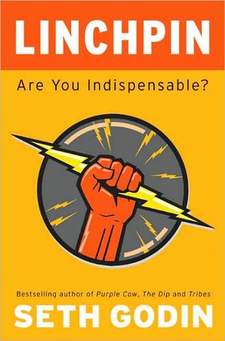
On a related note, over the March Break, I had an opportunity to read Seth Godin’s Linchpin and within the pages of his book he shares his vision of an artist as “someone who uses bravery, insight, creativity, and boldness to challenge the status quo.”  Godin creates a detailed image of a linchpin, as someone who the organization needs and without that type of employee the status quo would never be challenged.linchpin

In combining the two references, one must be brave (willing to get bloody) in order to challenge the status quo.

What are some of the initiatives that you’d be willing to get “bloody” for?

Come write with me….

From Breakfast to Breakthrough

What started out as an innocent invitation to a breakfast meeting has now turned into the most profound professional learning experience of my career.breakfast

In the fall, I was invited to a breakfast meeting with three other colleagues, with whom I had had the pleasure of working with through our community of schools.  We had each had an opportunity to read, Intentional Interruption by Steven Katz and wanted to explore the notion of an administrator professional learning network, focusing on Katz’s notion of Problem of Practice.  Our schools were different, I was now at the education center, working in a system role, we had been in the role as administrators for various lengths of time and therefore a very eclectic group. Our common denominator was that we were all intrigued by Katz’s work.

So we decided to pull out our calendars and schedule some 3 hour sessions whereby we would not only delve into our own Problems of Practice, but we would construct and deconstruct a way to facilitate this process to eventually assist others who may be interested.

In order to include an added perspective to our “Breakfast Bunch” we invited a trusted and well respected Student Achievement Officer to join us.

As we started with the process, our first group member boldly decided to share what he thought was his problem of practice with our group, only to find, after an hour of interrogation from the rest of us, the root of his POP needed to go deeper and his focus shifted to another area within his school.

As a participant, I was intellectually challenged to maintain the same high level of questioning, comments and suggestions that my colleagues were bringing to the table.  I loved the dialogue and was inspired and energized and so thankful for the opportunity to be a part of this process.

But it wasn’t until it was my turn on the “hot seat” that I truly appreciated the power of this process.  At our next session, it was my turn to present my Problem of Practice.  I spent time preparing and thinking through how I would present, what evidence I could use to support my position and truly felt I had a well-constructed POP.

As the interrogation began, I was comfortable in supporting my position, I held steady to what I thought was my belief about my practice and rationalized my choices.  As the questions continued, I felt that I was dodging one line of questioning only to enter another line from another colleague.  It was intense and intellectually demanding.  As educators we are so passionate about what we do and how we do what we do… It’s hard not to take the questions personally.  As the barrage continued, and just when I thought I couldn’t go any deeper …. It hit me!

And it was just like those moments in the movies or the cartoons when the light bulb goes on.

download

My problem of practice needed to involve others, it didn’t have to be “just about me doing it on my own”.

In my 25 years of education, I’ve had many great moments of discovering something new, a new resource, a new technology  or a new way of doing things. But I’ve never been a part of a process whereby through the unconditional trust and professionalism of others, I was able to truly come to a deeper understanding of something that now has a profound effect on how I go about doing my job and hopefully empowering others to do their job.

I’m thankful for my colleagues and that initial invitation.  Together we are continuing to inspire, empower and push not only our own but each other’s thinking.

Have you ever been involved in a professional learning opportunity that truly changed how you do your job?


Come write with me….

Counterintuitive

 For the last few weeks, the title of the current series at church has been Counterintuitive.  Each week the topic has changed but the foundational component of looking at “relationships, friendships, money, etc.” in a manner contrary to what common sense would indicate has been the core of each message.  As I tend to do, each week, I draw various connections from the Sunday message to my life as leader in education.  So this week as I was scrolling through my Twitter feed, I just had to stop and read Great Leadership Comes with a Counterintuitive Approach.  As I read the blog and reflected on his two choices of speed and failure, I wondered if it went deeper than that. 

Those skills which we once associated with strong leaders may be impeding an organization’s ability to move forward and be as creative and successful as possible.  If your leader never fails, then how often are you, going to suggest something new and innovate which may be not completely successful at first blush?   If your leader never exposes their own vulnerabilities, then how often will you share your challenges and those areas that you feel more support with? 

I’m finding in my new role that my vulnerabilities and my learning curve are exposed on a regular basis. I need the expertise, the advice and the wisdom of my team in order for us, as a collective, to make powerful, impactful decisions.   Does that make me any less of a leader?

In supporting some coaches this past week, we chatted about their role and their discomfort level with some grade levels.  I used the term “vulnerability” and encouraged them to openly share that vulnerability with teachers who are proficient with those grades.  What a great way to begin to forge a relationship.  People need to be needed.   Does that make them any less of a coach?

As we look at the expectations that we’ve placed on our educators to embrace new technologies, new paradigms in terms of professional learning,  new expectations within curriculum guidelines and new strategies for assessment and evaluation, I’d like to think that we’re also creating cultures where educators are encouraged to share their vulnerabilities and to say that they don’t “get it”.   Does asking for help make them any less of an educator?

In the summer I stumbled upon Brene Brown’s Ted Talk on Vulnerability. 

I find myself re-watching it every now and again as the message is one that continues to resonate with me.  If the notion of vulnerability is one that you are looking to explore, you may find this useful.

Has your notion of what makes a good leader changed over the course of your career? 

Come write with me….

I’ve been tapped ~ Blogger Challenge

Happy New Year to All.   2014 has already included some interesting adventures ~ A family Trip to Blue Mountain, including conquering a Double Diamond run,  a trip to Las Vegas with my mom, including a lucky Jackpot on the Wizard of Oz slot machine,  a trip which ended with a cancelled flight due to a significant storm on the east coast of the United States and two snow days, with no school. I’m hoping this is a vision of things to come for the remainder of the year ~ Lots of adventures and out of the ordinary days and nights.

blog


As this year begins, I was thrilled to be tapped to complete the blogger challenge by@DavidFifeVP.  For those of you new to the blogger challenge here are the 5 steps.

  1. Acknowledge the nominating blogger
  2. Share 11 random facts about yourself
  3. Answer the 11 questions the nominating blogger created for you
  4. List 11 bloggers
  5. Post 11 questions for the bloggers you nominate to answer, and let all the bloggers know they have been nominated. Don’t nominate the blogger who nominated you

So here we go….

11 Random Facts About Me

1. This summer I completed my level one and two sailing certification.
2.  I love to play online Words With Friends.
3. I traveled to Scotland when I was 12 and visited the castles of my mom’s childhood.
4.  I hate peas and will effectively dislodge them from any food which they may be hidden in.
5. I’m trying desperately to break my Diet Coke addiction
6. I love chick flicks and have been known to watch my favourite ones, over and over again.
7. My favourite winter time drink is white hot chocolate.
8. I used to teach figure skating and still enjoy strapping on my blades
9. Exactly 10 years ago to the date (Jan. 7 2004) I fell in the driveway, on the way to work and shattered the two major bones in my right leg.  It was five months before I was walking on my own ~ But I was back at school (in a wheelchair) within 3 weeks. I still set off the buzzers in airports!
10.  I love the smell when you first walk into Rheo Thompson Chocolates in Stratford
11. When I’m feeling stressed or overwhelmed, I find the closest body of water and get things back into perspective.

questions

And now my answers to Dave’s questions:

  1. What is your favourite childhood memory?
    Growing up we used to travel up north to fishing camps with my cousins from Michigan.  I loved those trips.
  2. Who is your hero and why?
    I continue to love and respect my parents for all of their accomplishments.  Teenage parents, who have beaten the odds and become successful business people and still happily married after 50 years.
  3. What is your favourite place on earth? 

    I believe that any place can become your favourite place, depending on who you are sharing it with.

  4. If you choose any profession other than in education what would it be and why?
    I loved chemistry in high school ~ so maybe a science researcher.
  5. What’s your favourite type of music?
    My current favourite artist is Michael Buble ~ followed closely by New Country music
  6. What’s your favourite comfort food?
    There’s nothing like a turkey sandwich on the day after Christmas or Thanksgiving ~ soft white bread, mayonnaise, lettuce and cranberry sauce.
  7. If were given a million dollars to donate to charity where would it go?
    If I had a million dollars, I’d work with the Limberlost Chaplancy and develop programs to support the families in that complex.
  8. What was your first big ticket purchase?
    When I was 16 I bought my first car. It was a silver Ford Cortina. It had a stick shift, which I didn’t know how to drive until after the vehicle was purchased.  I was a quick study!
  9. If you could be an actor on any TV show which show would it be and which actor?
    Growing up, I wanted to be Lindsay Wagner (The Bionic Woman) or Jaclyn Smith (Kelly Garrett on Charlie’s Angels)…. I guess I’ve just given away my age!!  LOL
  10. Do you have a special skill or hobby?
    Not that special, but I do play the piano and knit.
  11. What is your greatest accomplishment?
    My 3 kids… I continue to be amazed and proud of the wonderful, caring young adults they have become.


Here are my 11 Nominations to answer the following questions:

Lisa Munro

Wendy Olson

Ingrid Agar

Mark Carbone

Doug Peterson

Ryan Matthews

Sean Junkins

Evelyn Giannopoulos

Marsha Kelly

Jen Aston

Niall Cooke

Questions:

1. What is your favourite movie?

2. What was your favourite teachable moment?

3. Who was your favourite teacher growing up and why?

4.  Have you developed a bucket list?  If so, what are the first three things on it?

5.  What is your favourite professional sports team?

6.  What was your first paying job?

7.  What has surprised you the most in the last year?

8.  What are you looking forward to in the upcoming year?

9. If there is an “end of the rainbow” what would like to find there?

10.  What is/was your favourite video game?

11.  What is your favourite scent?


Thanks for the tap, Dave!


Messy and Meaningful

ii

This year, our school board has begun to adopt the philosophy behind Dr. Steven Katz’s book, Intentional Interruption and to that end many of our administrators are providing their staff with the opportunity to determine the path for their professional learning. As there is value in collaborating beyond your own school walls, there is an expectation that teachers will embrace the chance to work with colleagues in other schools.

Last week I was thrilled to be invited to one such session where the primary division from four schools came together to share identified student needs, in an effort to develop a common teacher need which would form the basis for their collaborative inquiries.  Asking caring educators what their students struggle with quickly created a common thread of connectedness among the participants. Most teachers could articulate an evidence-based list of student needs.  It was only after some pointed questions that the groups were able to condense their long list into 4-5 common themes.

Yet, even after the themes were shared and teachers positioned themselves to create “like-minded” groups, much conversation still needed to occur, which reinforced the need for a common understanding of the student need, before moving to the next step.  Those conversations are crucial for the success of the collaborative inquiry process.

Once the group had a common understanding of what the student need was and what their current scenarios looked like, came the challenging part of asking the questions which would support teachers in reflecting on their current practice.  Asking anyone to reflect and then to consider changing/enhancing/refining one’s practice takes skill and the ability to ensure you are honouring what the teacher is already doing. The questions also need to focus on the evidence of student learning.  We know that teachers are working very hard to “teach”, but what is the evidence that the students are learning?

As our afternoon continued, I watched as the administrators and instructional coaches flowed from table to table redirecting conversations, digging deeper with their questions and then coming together to confer on what they were seeing and hearing from their staff.  The one common comment was that this work is “messy’.  There is no pre-made instruction manual or fool-proof recipe to follow.  Nor would we want one because the reality is that the sustainable learning comes from everyone (all educators) being engaged in the process.  For the administrators to arrive with a well-crafted Inquiry question ready to share, the teachers would have lost out on the opportunity to be a part of the process and hence, not as personally or professionally invested.

It was amazing how quickly the afternoon flew by. For me, as a visitor to the process, I quickly found myself invested in children that I’d never met.  I was getting excited that their teachers were starting to formulate ways of refining their practice which would ultimately have an impact on how students demonstrated their learning.  And although not all changes to practice may have the intended outcomes, the fact that these teachers are willing to try something new, something based on what research supports as good pedagogy is the first step in a professional learning cycle. images (1)

I commend the administrators for looking for ways to incorporate a networking component into the reflective procedure of determining one’s problem of practice.  And although step one was messy, I have no doubt that the end result will be meaningful for all parties involved (teachers, students and administrators).

How are you, as administrators, honouring the work of your staff and providing them with the conditions which will allow them to delve deep into a problem of practice?


To Tweet or Not to Tweet

twitterThis past fall, I have truly embraced the power of Twitter as a form of self-directed, job-embedded professional learning.  It was back in 2008 when I first created my account. My first tweet was “Smile…. Enjoying the first day of 2008”.  I had no idea who I was sending it to as I didn’t understand the concept of “following” or “followers”.  My account sat dormant for the next 3 years.  In the fall of 2011, in an effort to explore another method of engaging our parent community, we created a school account and added the Feed to our school website.  I used the school account daily to send out messages about upcoming Parent Council meetings, exciting learning activities which were happening, school events and welcoming messages ~ one way communication!

Within a few months, I returned to my personal account and started to “lurk” and follow a few others.  I can recall the excitement of the first time someone “retweeted” a comment, or favourited something I had tweeted.  There is such a feeling of validation when another educator publically shares that they agree with something you’ve said.

Within months, my irregular visits to Twitter became a daily part of my professional life.  I would start my day reading articles, blogs and comments and then retweet those that had an impact on me or might assist a colleague.

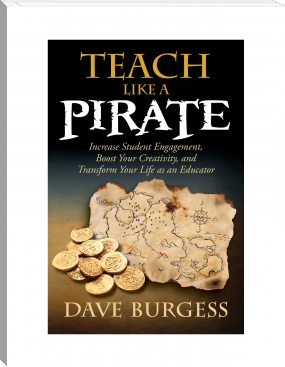
During the March Break, I had my first Twitter conversation with Dave Burgess (Teach like a Pirate) which resulted in him coming to our school for a professional learning experience which helped in transforming how many of staff reflected on their practice.  I then started to see how Twitter could become more than one way communication.  It could become a conversation and hence, a wonderful window into deep professional learning.coverpic3d

Within the last few months, I’ve had the opportunity to meet some of my international Twitter “peeps” in person and I’ve pushed myself to not just retweet but to comment on the articles and engage in online conversations. There is such a tremendous amount of information available to use. But just as we tell our students, we need to be able to critically analyze the information that is coming at us at exponential speeds.

Last month, we started a Twitter Challenge within our school board.  We have over 80 educators who are excited about exploring this form of social media to enhance their professional learning. Some of our participants are brand new and others are seasoned users who are assisting as mentors.  We are thrilled with the level of professional dialogue, the exchange of information, the sharing of pictures of student learning and the amount of reflection that is occurring and being documented through this process.

Within my career, I cannot recall a time when I had more access to the latest research, such a broad professional learning network, daily opportunities to challenge my thinking or more intellectual connections to my colleagues.

Are you using Twitter to enhance your professional learning?

Come Write with me…..