Appreciation

The other day, as our flight safely touched down, the entire cabin of passengers clapped for the pilot. The gentleman behind me said, “Hey, I wish that people clapped for me at the end of my shift” and I started to think about how we demonstrate our appreciation for a job well done, in the field of education. Do our students clap for us at the end of an exciting engaging lesson? Do we receive a standing ovation when we enter our classrooms at the beginning of the day?

Often times, in my role as an administrator, I receive lots of emails and phone calls about concerns, but every once in a while, I’ll get a call from a parent saying, “Thanks”. I wonder if they know how important those words of appreciation are?

I often ask myself, am I demonstrating enough appreciation for our staff ~ Do I tell them often enough what a great job they are doing day in and day out?

I am truly blessed to work with a number of staff members who demonstrate their appreciation in a variety of ways ~ cards, notes, cups of hot chocolate, gift certificates and of course, chocolate treats surprising me on my desk…smile
As I begin a new week, I’m going to make a concerted effort to “figuratively” clap for those teachers who land their planes safely every day. We all have days where the turbulence is more noticeable than others ~ days where we joke about “buckling our seatbelts as we’re in for a bumpy ride”. But at the end of each day, we safely land those planes and send our students home, with more knowledge and more curiosity than what they arrived with that morning.

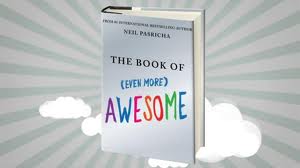
The Book of Awesome

In the midst of a crazy, busy week at school, I found myself invited to one of our grade 7/8 classrooms as a guest listener to hear the students share their latest writing assignments. Their teacher had been sharing selections from, “The Book of Even More Awesome”. The stories and the style of the writing resonated with the students and they wanted to develop their own collection of “Awesome” experiences. The students had selected experiences within their life and wrote about them. The teacher then spent a great deal of time working through the process of identifying the success criteria for a well written paragraph. The students then worked through the process of self assessment and peer assessment as each reworking of their paragraph demonstrated noticeable improvement.
The final copies, which were presented to me, were shared with such pride and I loved how they praised each other’s work. The students had been engaged in the writing process and more importantly, they were invested in the improvement process. As I listened to their stories, I was impressed with their use of exemplary vocabulary and their ability to evoke emotion and imagery.

I was inspired so much by their writing that I went out on that weekend and purchased a copy of Pasricha’s books and started to read his blog, “1000 Awesome Things”.

Since that day, I have started to take note of those memorable moments in my day. During the school day, awesome things are always happening ~ everything from students coming to my office to share their work, smiles and silent finger wave greetings from students as they walk through the halls, staff coming and sharing success stories about a student finally “getting it”, walking into classrooms and being warmly greeted by students and having them anxiously call me over to share their activity, spontaneous hugs from those who seem to know that’s exactly what I need at that moment and the list goes on and on.

As Pasricha states in his book, “when bad news washes over you and when the pain sponges and soaks in, I really hope you feel like you have two choices. 1. Swish and swirl in the gloom and doom forever or 2. Grieve and face the future with newly sober eyes”.

Looking for those “awesome” moments continues to keep a smile on my face and hopefully that smile becomes contagious.

What are some of the awesome things that happen in your life?

I Love Lucy

For one of my system responsibilities, I’m a facilitator for our Emotional Intelligence workshops. This past Friday, we completed our final module, focusing on Decision Making, Problem Solving and Stress Management.  We spent a great deal of the afternoon sharing our challenges as administrators and discovering ways to protect ourselves from the potential stressors in both our professional and personal lives.  We laughed a great deal and took comfort in the fact that we are all in this together.  One of the video clips that I shared was a classic  “I Love Lucy” sketch ~ I love Lucy Candy Factory Video.

Although the initial intent of showing the video was to illicit laughter about a stressful situation, the audience reaction and subsequent observations led us to a deeper discussion about the effects of “management” on the worker and how that relates to us in education.  I shared with the group that my connection to the video clip was that it reminded me of my progression in leadership.  The beginning of the clip is how I felt as a VP in my first placement ~ I was able to head home at the end of the day, feeling as if my desk was cleared (all of my candies were neatly wrapped).  As my admin career continued into my first principalship, the conveyor belt became faster and every now and then a few “candies” fell off the belt.  Now, I find myself in a complex, exciting and unique building with over 750 students and 85 staff members.  It is very rare that when I leave at the end of the day, I feel as if all of the “candies” are neatly wrapped and yet when our supervisors see us, we make it look manageable and hence the conveyor belt speeds up and we take on more challenges.  We continue to learn and grow with each new challenge and our skills improve.

I can’t help but reflect on those candies that are being neatly wrapped, those that are falling off the conveyor belt and those that I’m hiding in my hat….smile!

Lollipops

 I’ve just finished watching Drew Dudley’s Ted Talk , Leading with Lollipops and was inspired to share a few thoughts. Dudley reminds us how important we are to others. Each day we make the lives of others better by things that we say and things that we do.  As educators we have the opportunity to make the lives of our students better, to make the lives of our colleagues better and to make the lives of our entire school community better. 

 It’s amazing what a smile can do on a day that has been wrought with challenges ~ or an unexpected gift of a hot tea on a chilly day.

As teachers we have the opportunity each morning to greet our students and begin their day at school with a fresh start, regardless of the home life they have.  We have the opportunity during the day to inspire, encourage and motivate those around us.

 Ironically last week, I overhead a student, who was in the office say (although it was more of a yell), “Ms. X is the only teacher in this whole school who likes me”. He was talking about a teacher he had two years ago. That teacher was obviously handing out lollipops each and every day and she probably didn’t even realize the effect she had with that student.

“It’s frightening to think that we matter that much to each other” quotes Dudley and how true is that statement?   By embracing what Dudleyis saying, it forces us to choose our words and deeds carefully.

 What are the figurative lollipops that you pass out each day?

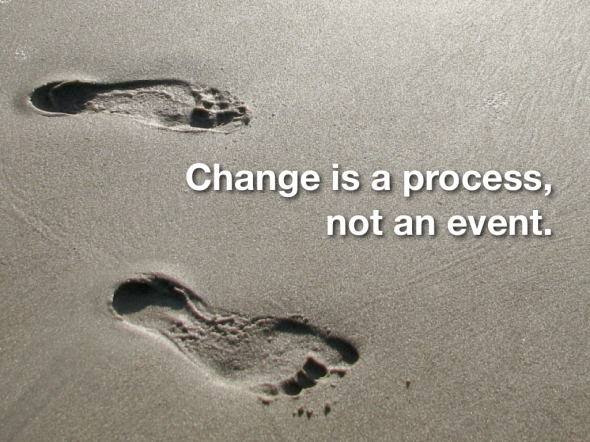
Change

A few weeks ago I read a quote on Twitter which resonated with me ~  “Change is inevitable, growth is optional”.    In education, we are always in a state of change as we continue to meet the ever changing needs of our students and their families.  As I reflect on my own teaching career, there are so many more innovative ways to engage our learners; everything from technology to research about multiple intelligences to new resources.  As I reflect on my career in administration, we are also embracing change as we purposefully work together in Networks to improve student learning by focusing on teacher practice.  We are becoming more intuitive about how best to use data to support our school based goals and improvement plans and the list goes on….

I shared the above quote at a staff meeting, prior to a discussion about staffing for the upcoming year.  I was pleasantly surprised by those staff members who appreciated the philosophy behind the quote and who are already thinking about how they can continue to embrace growth within their current assignment and also what opportunities are available to them if they choose to explore another teaching assignment.

As with any message shared, there were also some staff members who became quite anxious about the potential for a  change in assignment for next year.  I was left wondering how best to support those educators who need the confidence to know that they may be just as successful in a junior classroom as in a primary classroom.  After all, we are “teachers”, not “grade three teachers”.

As teachers, how do we model “embracing change” for our students?  

As administrators how do we support our teachers and encourage them to continue to grow and improve their practice, when change is not an option.

The Genius in All of Us

 This past Christmas, a staff member gave me an audio book of David  Shenk’s, The Genius in All of Us.  The book challenges our thinking about “nature vs nurture”. How many times have we heard, “He was born with talent” or “She is genetically predisposed to be a genius”?  At times, in education, we mistakenly presume that children from lower socio-economic households will tend to be less academically capable than their counterparts from higher income households.  This book delves into the childhoods of Beethoven, Ted Williams and Yo Yo Ma and explains that their “genius” was very much dependent on a desire to better themselves and lots and lots of hard work and practice.  Their genetic patterning is no different than that of the students currently sitting in our classrooms.  

 How does Shenk’s research change what we do in education and ultimately why we do what we do? It begins, as always, with a belief that all students are capable of achievement if provided with the right set of circumstances within their learning environment.  Shenk’s research no longer allows us to “blame” poor parenting or government-assisted housing for poor student achievement.

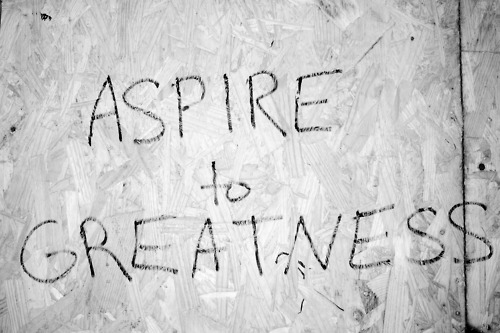
One of my favourite quotes from the book is, “children will develop only as the environment demands they develop”.  Ultimately if we set high standards and effectively scaffold learning thenALLstudents will reach the bar.  We do a disservice to our students by only providing them with easy, low level thinking activities. We need to engage our students in challenging, rich tasks that promote their thinking and inspire them to demonstrate their greatness ~ whether it’s in the arts, academics or athletics.

It’s our job in education to set high standards and more importantly to model high standards, not only for our students, but for ourselves.

As Shenk reflects, “With humility, with hope, and with extraordinary determination, greatness is something to which any kid—of any age—can aspire.”

 Let’s give our students the targets, the tools and the toolkit and support their determination as they aspire to greatness!


Start with WHY

Happy New Year to Everyone!  Over the Christmas holidays, I had an opportunity to read Simon Sinek’s book, Start with Why ~ How Great Leaders Inspire Everyone To Take Action.  Although there were no direction connections to education, as I wore my administrator’s hat, I was able to glean many strong similarities between inspiring a successful organization, such as Apple and Wal-Mart and inspiring a dedicated group of educators.

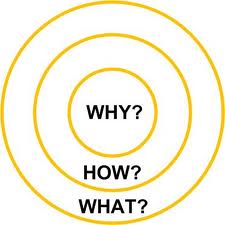
The basic premise of his book is theGolden Circle~ three circles with “why” in the center “how” on the next largest one and then “what” surrounding the other two.

 When I reflect on those three questions in regards to education, the first two are easy to answer.

What do we do?   We educate children. 

How do we do it?   We teach them and then we assess what they have learned. If they have mastered what we’ve taught them, then we move on to the next concept. We model appropriate behaviour and provide support and guidance for students.

 Why do we do it?  Ah ~ not as simple an answer.

It would be interesting to ask 100 teachers why they do what they do.  What inspires them each morning to arrive to a classroom full of 20 – 30 students, not knowing what the day will bring?  What inspires them to improve their own practice and collaborate with their colleagues? Is there a collective sense of  “WHY” in their school or within their board of education?

 As leaders in our buildings, we need to ensure that everyone knows the WHY of what we do.  It’s more personal than a school improvement plan, it’s more deep-rooted than improving Provincial test scores and if conveyed properly, it can change the culture in a school.

“It is not just WHAT or HOW you do things that matters; what matters more is that WHAT and HOW you do things in consistent with your WHY.

Sinek goes on to say that as long as you know your WHY, then the WHAT and HOW are easy.   You can filter all of your decisions based on your WHY. 

Education is a powerful organization. It is responsible for ensuring that today’s students become tomorrow’s leaders, parents, doctors, electricians, teachers…

We better know WHY we are in this business, if we want to improve it, if we want to ensure that our students are receiving the best possible education and if we want to create cultures in schools where we inspire not only our students but each other!

My question for you today is….

Do you know WHY you do what you do?

 Come write with me

Sue

Kids Say the Darndest Things

I recall when my own children were in Kindergarten. All three of them had the wonderful opportunity to have the same, caring teacher. My middle child, who to this day, continues to embrace the “shock and awe” factor, would often come home from school and regale us with tales about his day, complete with details about the sandbox, the building block centre and stories about who said what to whom. I remember going to his first parent teacher interview and the teacher sharing some very sage words of wisdom. She told me that her rule of thumb is that she’ll only believe half of what the students tell her about their home life and she asks that we do the same in regards to what they share about their day at school. As my children grew up, the stories about their day at school diminished into a simple sentence or the dreaded response to the question, “What did you do at school today?” “Nothin’”.

As we continue to search for ways to engage our parent community, I’m wondering if we, as educators, can provide ways for students to expand on the “Nothin” answer when questioned about their day.

Today, a cool thing happened as I was doing a walkthrough. In one of our Early Years classrooms, the teacher was sharing a video she had taken of one of her students reading a story, with our newest technology purchase ~ an

 iPod Touch. The teacher had the student write a quick email to his dad, “Look what I just read” and the teacher emailed the video clip and the email to the student’s dad at work. Dad then replied. What a wonderful real life application. Think about their dinner conversation that night.


Earlier in my career I worked with a colleague who developed the “Picnic Table” concept. Each Friday, the students were asked to take home their laminated picnic table, make their parents a coffee, a pop or a glass of juice and then sit down and share specific learning activities from the week. The students were provided with a script and the parents had to sign off that they had taken part in the picnic table discussion.

When I think about the things that I bring home and share with my own family, they are usually the exciting components of my day when I’ve had the opportunity to interact with others. Being in my office and working on reports etc, is not a very engaging dinner table discussion. But on those days when I get to work with teachers, students or colleagues and I’m challenged to do something new or out of the ordinary, I can easily dominate the discussion from the appetizers straight through to the dessert.


My question for today is…..

What happened in your classroom today that students will be excited about sharing with their parents?

The Pledge

To mark the beginning of Bullying Awareness and Prevention Week, all school community members within Thames Valley District School board and our co-terminous board ~ London District Catholic School Board, will be asked to take “The Pledge” on November 14 at 10:00 a.m.

“I believe that everybody has a right to live in a community where they feel safe, included, valued and accepted regardless of differences.

I pledge to be respectful of others and stand up against bullying wherever and whenever I see it.”

As a school administrator, I feel strongly that we not only teach our children to comprehend, compose and communicate their calculations (my own contemporary version of readin’ writin’ and rithmetic) but that we purposefully teach our students what it means to be a good citizen.

As I’m composing this blog, I’m reminded of the Robert Fulghum poem, All I really needed to know I learned in Kindergarten.

” All I really need to know about how to live and what to do and how to be I learned in kindergarten. Wisdom was not at the top of the graduate school mountain, but there in the sand pile at school….”

The rules of Kindergarten are simple and if everyone followed them, what a wonderful world we would live in.

As I counsel students in my office, after an altercation at school, I often refer to the “Golden Rule ~ Do unto others as you would have them do unto you”. That has always been a simple, yet powerful message for students who have a sense of empathy and understand that their actions have hurt another person.

What does global citizenship look like in 2011? Is it any different than when I attended school? Or when my parents attended school?

Have the “bullies” changed within this generation? When I recall my days in elementary school, there was one “known” bully in our class. We all knew who he was and we all stayed away from him. As I grew older and became more aware of his home situation, I started to understand a little bit better why he felt that violence was the answer to everything.

Fast forward to today….Cyber-bullying is a term that was not part of our vernacular when I attended school, yet today, as a school administrator, it is rare to go through a week when I’m not dealing with an issue that either started or escalated on Facebook. Has this technology provided students with a forum to say things that they would never do face to face?

 Are the “victims” more reluctant to bring their issues to the attention of others? If so, how can we change that culture?

The “Pledge” is a step in that direction. This week, we will be focussing on encouraging Upstanders to Take a Stand and celebrating their strength as they do so.


Learning Goals and Success Criteria

How many goals do we set as adults on a regular basis?  Whether it’s the “honey do” list that we create for our spouses in order to get projects completed around the house or the weight loss goal that we set for ourselves, we are constantly setting goals and determining what we need to do to meet that goal. If the goal is to build a deck, then we break down the list of steps that we need to take in order to meet the goal ~ design the deck, purchase the materials, build the platform, add the railings etc.  


As we continue to expand our understanding about how best to meet the needs of our students, we find ourselves exploring the research of Stiggins, Chappuis and others. They share that “learning is easier when learners understand what goal they are trying to achieve, the purpose of achieving the goal, and the specific attributes of success”  To that end, we are now working with teachers and having them develop and share Learning Goals for their units of study.  The Learning Goals are based on the Ontario Curriculum expectations, but written in student friendly language.   The success criteria (the “what” we need to meet the goal) break down the learning goal into meaningful, attainable aspects of student performance. They are in essence the “look-fors” that teachers can use in order to provide feedback for the student and ultimately a final assessment.


< ?xml:namespace prefix = o ns = "urn:schemas-microsoft-com:office:office" /> 

For example, if the Learning Goal was: To be able to relate units of time, the success criteria may include: name units of time, use them in a sentence, understand what each unit of time means, order times from shortest to longest.


In order to support your children in their success at school, ask them the following question, “What was your learning goal in Language/Math today?”   Then see if they can articulate what they need to do in order to meet that goal.


Back to my “honey-do” list….


Goal: Prepare a Thanksgiving Meal.

Success Criteria: Complete the grocery shopping, make the stuffing, prepare the bird, boil the potatoes, make the gravy, etc. etc.   


I wonder how my in-laws will evaluate the final product?