Treading New Ground

I love being challenged.

Like most people sometimes I take up the challenge, other times I sit and wait, watching how others might handle that same challenge and sometimes I just know; THAT challenge is NOT for me.  And I’ve learned over the years to give myself permission to be okay with that.

But when  Chris Kennedy (Superintendent  from B.C.) shared his experiences with online blogging and the impact that it was having within his school district, I decided to take up the challenge on a few fronts.

I had started this blog you are reading now,  back in the summer to be more of an ‘ideas’ type blog – a place where I would grapple with some of the educational issues around student engagement I was encountering around our writing goal. My challenge with this blog was to finally send it public.  Writing in isolation is one thing, but sending it public was (and still is) very scary at times. But we ask our students to make those life connections all the time. I needed to delve into that world a bit myself, I thought!

I had been doing an ‘events’ type blog within our SchoolSites template for the past year. These focused on seasonal themes, or events which were happening in and around the school. (e.g. Literacy Night, gift-giving at Christmas, or what I got out of a movie our family watched one weekend) I also experimented a few times with a video-blog and read my favourite books for our students to listen to or gave a tour of our new wall photos and art-work.

And now, the latest challenge. It was best explained at a recent Board Meeting when our Public Relations department presented their reasoning behind setting up a TVDSB Facebook page along with a Twitter feed. (minute 42:00 on the Sept 27th video) No longer can we expect our students and their parents to always come to our websites to get the information, but in a social networking world, we have the ability to push that information out to those who are interested in getting it.

So we at Jury now are experimenting with a school Facebook page and a Twitter feed which we’ve embedded into our website for anyone to see regardless of their having a personal data device  (eg. iPhone or BlackBerry)  of their own. This also allows us to update those feeds from anywhere we are.

Over the course of the next few blogs I will explore the “why” in all of these new innovations, in our desire to communicate through many different forms of writing. At Jury there will always be that assignment which needs to be hand-written, on paper and submitted to a teacher just like students have done for decades of time. But we also want to model and demonstrate that writing takes on many forms and can be presented through many different vehicles. In one very strong sense we owe it to this generation to model (if only on a small scale) how the tools of a social networking world can be used positively and constructively to communicate facts, events and even thought provoking ideas for others to think about, discuss and then, hopefully, even write about again in their own online journals and blogs.

So today I say not only ‘come write with me’, but come blog with me, come Twitter with me, and ‘like’ us on FaceBook.  Take up that challenge; you’ll find it’s well worth your while. The learning we go through, in this journey, helps us see the world differently, and for this generation, that is very important.

Sue

Have You Filled a Bucket Today?

This past summer, I came across a children’s book which was new to me, Have You Filled A Bucket Today? by Carol McCloud. I immediately loved the concept the within the book and began to think about how we could use the analogy of “bucket fillers” and “bucket dippers” within our school. I decided to purchase a book for each primary class (we have 10 classes from gr. 1 -3) and a plastic bucket from the craft store, which I filled with shining pencils, stickers and a bag of goodies. I was determined to get into every primary class within the first week of school, read the story to the children, do a follow-up lesson with them, share the contents of the bucket and then leave them with the following writing task, “Today, I filled a bucket by….” They were to place their responses in the bucket, with the intent of sharing them with me during my subsequent visits. For those of you who can appreciate being in a large elementary school, with over 750 students, you can imagine what the first week of the school year entails. For me this year, the highlight of each day was looking forward to spending time in each of the those classes. The busyness of the office was just going to have to wait until I got back there. Fortunately I work with a tremendous administrative team, who capably held down the “fort” as I enjoyed sharing the book and spreading the message.

On the second day of my “bucket -tour” as my secretary aptly named it, I was thrilled to hear one of our grade one students say, “Last night at the dinner table, my brother ( a grade three student who had heard the story the day before) said that I was filling his bucket by sharing the Wii game.

Many of the classes have created large Thank You posters and they are displayed in my office. One class drew a large bucket and each student filled in a Post-it note with how I fill their buckets each day.

When we meet as a Primary division at the end of the month, the classes will bring their buckets and we’ll share some of the stories. We will use the buckets throughout the year in a variety of other ways. I’m hoping the students will be generating ways to use their buckets.

As we are dealing with issues on the yard and in the classroom, we are asking students, “Are you filling someone’s bucket or being a bucket dipper?” Although I realize that simply reading a book and creating common terminology is not going to change the culture of a school over night, I believe that we are heading in the right direction.

So, my question for today is…

How are we filling the buckets of our students, our colleagues, our parent communities?

Come write with me

Sue

Begin With the End in Mind

My dad is a wealth of knowledge and he loves to share quotes and sayings as a way of contributing to conversations or when he is in the mood to give advice.  One of his favourite sayings is “Always begin with the end in mind”.  As we begin a new school year, I find myself putting things in place now that will make the year run smoothly and hopefully avoid those moments when we look at each other and wonder what the heck is going on. We’re scheduling times/dates/activities on a year long school calendar in order to avoid those inevitable conflicts that occur and we’re sharing with staff our expectations about routines and procedures so that everyone is on the same page. I’m making a commitment to spending quality time in classrooms with a focus for each walkthrough and starting that routine on day one, with the intention of maintaining it throughout the school year.

But as I think about beginning with the end in mind for a classroom teacher, I wonder what that looks like?  Our Ontario Curriculum states that by the end of each grade, the student will be able to……  So in essence we are starting with an end in mind. That end being the mastery of the chosen expectations.

As we have been working our way through Teaching Learning Critical Pathways and Learning Cycles, we have started with a diagnostic task which is designed to include those learning goals that we want our students to have mastered by the end of the assessment period.

But do we focus on that same premise when we think about our teaching practice.  If we know that an inquiry-based model is the most effective way to have our students engaged intheir learning, do we start the year off that way?  If we know that students need to communicate with each other in order to solidify their learning, do we start the year that way?  Or do we have them quietly sit in rows and complete review sheets for the first little while and then slowly move them to a more collaborative learning formation?


Although it’s much easier to produce the pages of review computations and the room is historically quiet while the students work their way through the questions, is that setting the tone for an active collaborative earning environment?


Although it’s much easier to provide an assignment that will only require a mark out of 10 as a form of assessment instead of a good quality task with lots of opportunity for effective, constructive feedback, should we be starting the year that way?

If our goal is to create a classroom where students are asking the questions that they want the answers to and researching, generating and presenting  their findings, then why don’t we model that on day one?


So my question for today is….

How are you starting your first day with your new class of students?

Come write with me.


Sue

The Art of Communication

Here we are on the eve of another exciting school year at Wilfrid Jury and I can’t help but wonder what the upcoming year will include for our students, our community and our staff. Last year we celebrated our 20th anniversary, we designed and build our Reading Garden, we beautified our front gardens, we hosted a Peace Tree workshop, we hosted the SWIS-London Official Launch, we piloted a number of technology projects, we installed more SMARTBoards and expanded our use of other technologies, we offered a variety of extra-curricular activities for our students and we continued to dominate at the Kiwanis Music Festival ~ just to mention a few noteworthy accomplishments.

< ?xml:namespace prefix = o ns = “urn:schemas-microsoft-com:office:office” /> 

This year, we are thrilled to be welcoming 10 new staff members to our teaching/learning team and excited about their contributions to our school culture. We look forward to meeting and embracing all of the new families who have moved into our school community and our newest wolves, our JK students who will be coming to school for the first time, this September.


One of our goals for the upcoming school year is to expand our forms of communication to ensure that we are sharing information with families in a timely and effective manner. We currently develop a monthly newsletter, which is available online and most teachers send home a classroom newsletter. We are working with staff to encourage them to develop and maintain class websites and monthly I share thoughts and ideas in My Principal’s Blog.


As a board, we are exploring the possibility of using Twitter and Facebook to share information. We will continue to keep you informed as these new forms of communication are being explored and piloted.  Please feel free to share your views about how we can better inform our school community.

We are looking forward to making this year our best year ever!

Everyone Has A Story

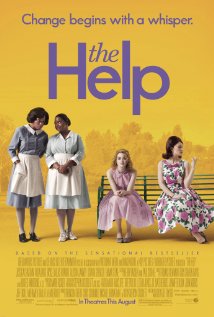
Recently I had the opportunity to go and see Tate Taylor’s,  The Help a movie which depicts an aspiring author’s decision to write a book about the lives of African American maids in 1960’s Mississippi.  The movie was so inspiring and moving on a variety of levels and I found myself on a rollercoaster ride going from laughing out loud, to clenching my heart and dabbing with a Kleenex to dry my eyes.  As the aspiring author gained the trust of the maids and as events in their own lives occurred, they started to share their stories which were both heart-warming and heart-wrenching. It was a true story about having the courage to share your story and the powerful impact such sharing can have ~ not only for the reader,  but for the author and now, in the movie for the viewer. Very few will have left the theatre that night unmoved and profoundly touched by the story. Can someone say Academy Award?

 Although our own stories may not be as noteworthy as surviving the Civil Rights movement or changing history by putting pen to paper, they are important to us and as we found out so vividly in The Help,  it’s important that we share those stories in some format. And in today’s world we have so many more vehicles for that expression.

When I reflect on the stories that some of our students have to share I am reminded that their stories also run the continuum of going from heart-warming to heart-wrenching.  Some of our students are able to articulate about going to Disneyland or about getting a new puppy. Others can share heart-wrenching stories about getting evicted or the death of a beloved family pet. We need to let our students know that there is great value in all of their stories and an even greater value in having the courage to share those stories.

So my questions for today are:

As teachers how do we create a culture where students freely share their life stories?

How do we share our own stories in a way that will inspire our students to share their stories?

How do we get our students to “dig deeper” when we ask them to write autobiographical information?

Come write with me…..

Sue

Creative Corners…

It’s been a couple of weeks since I’ve posted anything. It’s certainly not because of a lack of ideas/concepts/thoughts, it’s been more due to the fact that holidays are done and I’m back into the groove of school. I wondered when I started this blog whether or not I’d be able to maintain it once “reality” kicked in. Did I need the sound of the lake and the sunshine in order to inspire me to write? Does setting play a role in one’s ability to be creative?

I love my job and spending time with colleagues who embrace the core belief in wanting to do what is best for our students. It’s been very rewarding seeing our staff come into the school to prepare their rooms for their incoming students. The environment plays such an important factor in setting the tone and culture in a classroom as well as in a school. Brightly painted bulletin boards, Welcome signs, organized learning centres and labelled bins all signify to the students that this is a place where you are wanted and this is a purposeful place of learning.

As a school system, we have been moving in the direction of Bump It Up Walls or as I like to call them, Feedback Forums ~ a display within the classroom where students can see their work, but they can also see examples of how to improve their work. Those types of displays set a powerful tone in a learning environment. When I walk into a classroom, I’m cognizant of the layout of the student desks and student work areas. Are students provided with the opportunity to work in pairs/groups or are they expected to work in isolation? Are there designated areas in the room for guided reading and guided writing groups? Is the technology accessible to the students or is it used solely as a presentation tool by the teacher?

In a discussion with a colleague this week, she shared that when she visits schools, her focus when she walks into a classroom is to monitor who is speaking. Is the teacher doing all of the talking or are students engaged in meaningful discussions? Powerful dialogue can lead to the generation of wonderful ideas for writing. The best way to learn about something and to solidify your thinking is to be able to talk to someone else about it. Are you giving your students lots of time for purposeful discussion?

So my question for today is…..

What does your classroom say about the quality of learning that will be taking place in it? It is an environment which will allow creativity to flow? It is a place where children will be inspired to write?

Come write with me!

Who is Your Audience?

Well this blog is almost a week old.  I’ve posted a few random thoughts and I’m beginning to develop a structure within each piece, whereby I pose a question or two and then invite the reader to “Come write with me”.   This morning, I’m sitting here looking out over Lake Huron ~ the water is crystal clear and gently lapping on the shores, there is a single sailboat off in the distance slowly making its way to who knows where, but obviously in no rush to get to its destination.  I can hear some birds chirping in the woods behind me and there isn’t a soul around.  This is my little piece of sanity ~ this is where I truly feel at peace….  But I digress…

As is my usual morning routine (by the lake or not) I scroll through Twitter and catch up on the latest news.  This morning was no different, but I found myself wondering, who else is reading those tweets?  And similarly with this blog, who in the world would take the time to read some of my random thoughts?  When one finally gets the courage to put pen to paper or fingertips to keyboard you realize that all of a sudden your thoughts, ideas, feelings, aha moments and insecurities are about to become public. In this day of electronic communication, we are continually reminded that anything we send can easily fall into the inbox of someone else without our knowledge, with a quick “forward” or a more sophisticated cut and paste. But for today’s purposes, we are assuming that we know that others will be reading our message.

Does it matter who our audience is? I guess it goes back to the purpose of writing. When I think about all the opportunities we provide our students for writing, do we consciously ask them to think about their intended audience?  I know that it is an actual curriculum expectation and teachers include it on report cards. But if I asked a student, “Who are you writing this for?” I would imagine that most of them would say, “For my teacher because it is going to be marked”.  As adults do we write because we are being evaluated?  During the last several years, as I’ve worked through my Masters and Supervisory Officers courses, my purpose for writing was definitely for evaluation and I knew that my audience was my instructor.  Therefore I used a very particular style and voice when writing.  When I look at what I’m doing within this blog, I have no idea who is actually going to read this, so my style and voice can change and hopefully evolve as I continue to “ponder and post”.

I wonder how crucial it is for proclaimed authors to think about their audiences.   Does Stephen King know that only thriller fans will read his novels or does he hope to capture a wider audience?   Do famous bloggers, like Seth Godin, really know who their intended audiences are? I would never have considered myself someone interested in marketing and yet I find more connections to education in daily blogs about “Quality control”, “Courageous conversations” “Being interested and being interesting”.  In a short time, I’ve become a fan.  I listened to his latest book, Poke the Box in June and it inspired me to make some changes in my practice. It’s probably one of the reasons behind this blog.  What shapes his writing??  Is it as simple as if you are passionate about something, anything, then what you write will find its own audience?

 A few questions to think about….

If your intended audience shapes your writing, does that constrict you as a writer? Do we give students enough opportunities to write for different audiences? And what does that look like?  As we move past the era of marking everything that students do and towards an era of providing constructive feedback throughout the process and keeping the evaluation until the end, will students be able to get away from the notion of, “I’m writing this for my teacher” and into a world of “I’m writing about this because I have something important to say about this topic and I want to share it”?

What do you think?

Come write with me….  (I promise NOT to evaluate it 🙂 )

Sue

From a Tweet comes some Inspiration….

How many of you Tweet? How many of you follow Twitter? My iPhone has quickly become one of my favourite connections to the outside world. Instead of starting my day reading the London Free Press, I find myself scrolling through Twitter and reading the short posts from some of my favourite educational gurus. As an aside, within the last few weeks, I’ve had to add “Breaking News” as one of the sites that I follow, after having a coffee with friend and being embarrassed that although I could tell him where Todd Whitaker was speaking and the latest educational techno app, I was oblivious to the disaster that had just occurred in Norway that morning. So I now feel that I have all of the important bases covered ~ education and current events!

Some tweets are basic information such as “Heading out to the ball game” or ” Just ate at the best restaurant in town”, but others truly make me stop and think about my role as an educator.

Todd Whitaker, who I had the pleasure of hearing speak while I was in my first year as an administrator, has quickly become one of my favourites. I wonder if it’s because I have that “personal” connection with the man. When he spoke at our board office, he was truly engaging. This guy stands about 6’6″ and is the epitome of a southern gentleman, complete with his distinctive southern drawl. He enthralled a room full of administrators with his comical and heart-warming tales of his days as a teacher and as a principal. He was sharing his book, What Great Principals Do Differently  (read much of it on Google Books) and all of his examples made perfect sense to me. The book is a quick and easy read ~ I still find myself thumbing through it on occasion when I need a quick “pick me up!”

When it came to lunchtime, Todd sat down at our table to join us and he seemed genuinely interested in what we did and the challenges and successes within our school board. I still remember feeling that sense of “Wow ~ he chose our table to sit at!” It was similar to the feeling that a teenager would have if Justin Bieber or Taylor Swift stopped by for a chat….smile

A few questions to ponder……

Do our students need that personal connection in order to really get excited about reading and writing? How do we provide that type of inspiration when our students come from such varied backgrounds with such a vast spectrum of prior knowledge, interests and abilities? How do we create those “rock star” moments?

Today’s Twitter check-in was no exception and Mr. Whitaker provided me with a few things to ponder as he tweeted ~ When Einstein came home from school his mother never asked, “What did you learn today?”…. but rather, “What questions did you ask?”

In my current role as an administrator, I love it when teachers send their students to my office to share their work. As our school goal is writing, there is always a written component to the work that makes it way to my door…smile! This year we have been focussing on providing students with feedback which will assist them in improving their writing. So, after the students proudly read their masterpiece, my usual question is, ” Share with me how you improved your first draft in order to produce this piece of writing?” I’ve quickly learned that this is the greatest way for me to determine if our students are actually internalizing the goals that we as the teachers have created. A school goal is just a bunch of words on a page unless those we are working with actually understand what it is and how to reach it.

I’m also modelling asking questions and making our students think about their writing. As I walk through classrooms, our students have quickly learned that Mrs. Bruyns will always ask a question when she stops by your desk.

But, am I modelling this tactic with my staff? At our monthly staff meetings how much information do I share versus how many questions do I ask? Does my staff walk out of a meeting learning new information just by me talking to them about it or is the new information developed as we discuss it and challenge each other to come to the best solution? If I could video our staff meeting a week prior to the actual date and the outcome would be the same, then something is not right. I recall reading a book a few years back, Death by Meetings by Patrick Lencioni. (again check out Google Books) In that book, he states that people would rather go and watch a movie where the outcome is predetermined and they are passive participants than sit through a meeting, where they could potentially have the opportunity to interact with others and change the course of the meeting.

So my question for today is….

How do you create a culture where staff are encouraged to ask questions? How do you create a school culture where our students are encouraged to ask questions and not just sit passively in their seats while we spoon feed them information?

What do you think?

Come write with me!

Some Things Never Change

While some things never change…..maybe some things shouldn’t have changed!

This summer I find myself back at a family resort that we’ve been coming to for the past 15 years. Last year, I was the bad guy and decided to change our family’s summer plans and rent a cottage on another lake for most of the summer. But my youngest son still found a way to get himself invited back to this resort with another family. When I listen to my kids talk about their experiences here, how could I not help but give in and come back “one more year”. They talk about playing cards until all hours of the night by firelight, about getting caught in storms while out boating, about making crafts and about dining room antics.

When I describe this place to others, I start by saying, “Picture the summer resort in the movie, Dirty Dancing, without any sign of Patrick Swayze”. The cottages are definitely circa 1960 ~ complete with the rustic furniture and hand-created artwork adorning the panelled walls. The windows open just enough to let the bugs in at night, but not enough to create any type of airflow on the most humid of days. The evening activities are things that we would rarely do back home, such as Bingo, Samba lessons (now updated to Zumba lessons), Karaoke, Magic shows and “just like in the movie”, the week ends with a Talent Show. But once again, no Patrick Swayze jumping off the stage and into the crowd. As you make your way to the dining hall for your three mandatory meals, Beach Boys tunes and the occasional Johnny Cash song are blaring from the loud speakers. The recreation director does a great job of getting people involved in beach baseball, sand castle building, beach volleyball and horse shoes. Not much has changed in the last 15 years.

Now, not only have we been coming for the past 15 years, but we’ve been coming the same week for the past 15 years, along with many of the same families. Years ago, when the resort was in its prime and the American dollar was much healthier, this place was booked solid ~ to the point that you had to reserve your cabin in February. This year, we called three days before arriving and there was a cabin available. Times may have changed financially , but watching the sunset over Lake Huron, sitting around a campfire until midnight while telling stories and watching the most incredible night sky full of stars never gets old.

One of the families that we’ve come to know drives up here from Michigan each year. Grandma and Grandpa foot the bill for their two kids and their own families, who live elsewhere in the States. It’s the one time each year that the whole family is together. Grandpa is a retired shop teacher, so you can imagine our beach chats. I love listening to his stories about when he was teaching and his views on how education has changed. He certainly didn’t have a lot in the way of materials, tools etc. for his students, but they always learned a great deal. Tonight he was telling me about how he used to sharpen all of the tools himself, so that his students had the best possible opportunity to create their masterpieces.

What “tools” do teachers sharpen today so that their students can create masterpieces?

Grandpa talks with such pride about his days in the classroom (his shop) and he laments about the fact that over the years all of those “industrial arts” programs have continued to be cut. That is a point that we agree on ~ That is one thing in education that shouldn’t have changed!

We have a significant number of students in my current school who would greatly benefit from having more opportunities to fix and build things with their hands. We do what we can by bringing in old motors and bikes for some students to repair, but it’s only for a chosen few. I recall as a student having a choice of Industrial Arts or Home Economics when I was in grade 7 and 8. Those courses are no longer available at the elementary level. Students have to wait until they are in Secondary school and even then, there are so many mandatory courses, students only have a few opportunities to take such “elective” courses.

As we go into this new school year, we are going to reach out to our school community and connect with some church groups to see if there are volunteers who will come in one afternoon a week and share their talent (knitting, woodworking etc) with some of our students.

My chats with Grandpa often lead to comparisons between the American system and our Ontario system of education. I love learning what other countries deem as important when it comes to educating their youth. I strongly defend our system, yet deep down I realize, like any other system, we can always learn from others and continue to improve.

Well it’s off for a rousing game of Bingo…. I can bet that there will be the four corner game, where the winner has to yell, “I have BO!”. We all groan, but deep down we’re thrilled that some things never change.

Mulling! Important or not?

It’s been a few days since I’ve posted another blog entry, but I must say I haven’t forgotten about it. In fact, I’ve been mulling a lot about it since I last asked myself my over-riding question – How do we motivate students to write better – become better communicators and, I suppose, tied up in all of that, motivate them to write about things they know about and enjoy the process. I think that last part is almost instinctively vital for most teachers – we want kids to enjoy whatever we ask them to do. I mean, “You aren’t going out for recess, until you write for 2 minutes straight!!”, is a strong motivator, but what quality will we get from that type of motivation? Will we end up with engaging writers, who show a passion for their topic?

And so since the last posting I mulled. Actually looked the word up and one might say the first two meanings are appropriate!  Mull is actually an island off the coast of Scotland and I actually was on an island for a part of the week on a family holiday. Lots of time to mull. And mulling is a term used to heat and spice wine, for example! Ah, a glass of wine! Might be better for me than the Diet Coke my friend is always warning me about.  But the mulling I was doing had more to do with “to go over extensively in the mind; ponder or ruminate”.

Now there’s a good word – ruminate – actually has some roots in a cow chewing its cud, over and over again as it moves it from one stomach to another, (you knew cows had 4 stomach compartments, right?) Well, they do and I suppose that’s a good metaphor for the ideas I’ve been tossing around about motivating kids with their writing.

And then, like that proverbial light bulb, I got another flash! Do we ever teach kids how to ruminate over a topic? If we did what would that look like? When we give them a “QuickWrite” are we doing the writer and the topic justice? Should they be allowed to ruminate or ponder a topic for a bit? What kind of writing would I produce if someone walked into my office one morning and held up a stop-watch and said “Write for 2 minutes!” What would I produce?

So I guess the question for today is “How important is pre-planning, thinking about one’s topic, pondering, ruminating (if you will) to the whole writing process? How is that done? How does it begin? Practically speaking, what does that look like in a classroom of 30 learners, all of whom have different likes, dislikes and abilities. What’s a teacher to do? And is this stage one or some other stage.

What do you think?

Come write with me!

Sue …..